The Chicago Journal

Navy Pier Plans Largest Fireworks Display in Its History for America’s 250th Anniversary

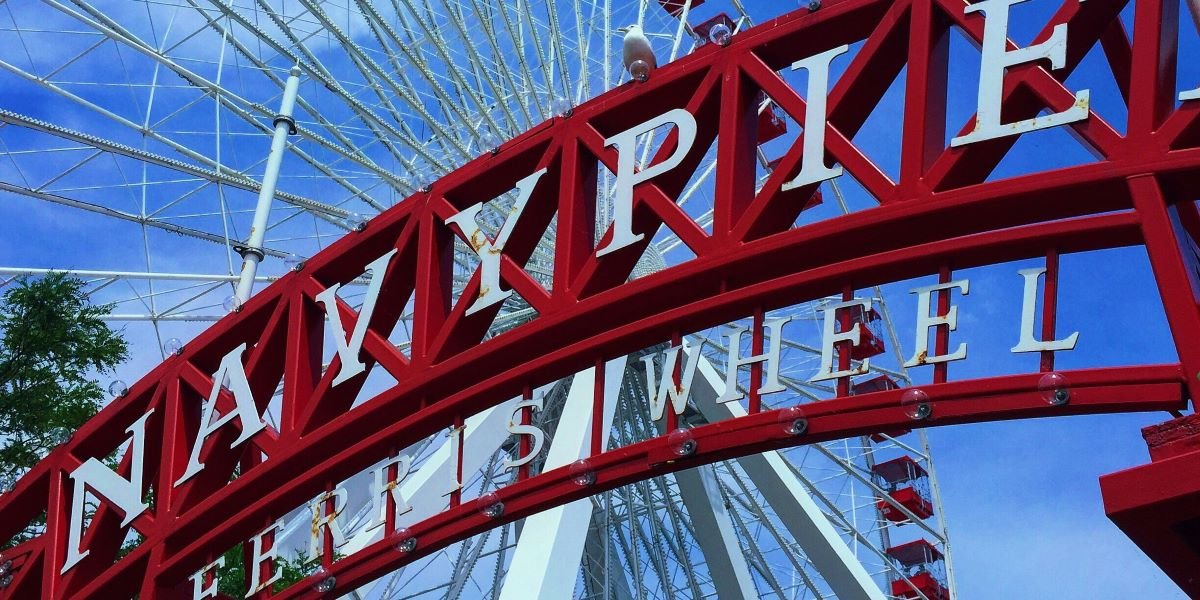
Navy Pier will stage the largest and longest fireworks show in its history on Saturday, July 4, 2026, launching a fully choreographed 15-minute display over Lake Michigan at 10 p.m. against the backdrop of the Chicago skyline. The expanded production, presented in partnership with Choose Chicago, commemorates the 250th anniversary of the United States and anchors a full day of Independence Day programming across the city that includes a free orchestral concert at Millennium Park and a Cubs-Cardinals rivalry series at Wrigley Field.

Key Takeaways

  • Navy Pier’s July 4 fireworks will run 15 minutes, fully choreographed to music, marking the largest and longest display in the venue’s history
  • The show is free to attend and begins at 10 p.m. over Lake Michigan, with the Chicago skyline as its backdrop
  • The Grant Park Music Festival will host its annual Independence Day Salute at the Jay Pritzker Pavilion in Millennium Park at 7:30 p.m., free and open to the public
  • The Chicago Cubs host the St. Louis Cardinals at Wrigley Field on July 3 at 3:05 p.m., July 4 at 7:08 p.m., and July 5 at 1:30 p.m.
  • Enhanced security measures include multiple checkpoints, bag searches, and coordination with the Chicago Police Department, the Chicago Fire Department, and the Illinois State Police

The 15-Minute Show Doubles the Standard Summer Display

Navy Pier’s free summer fireworks series has been a fixture of the Chicago lakefront for years, with 10-minute displays running every Wednesday at 9 p.m. and Saturday at 10 p.m. from May 23 through September 5. The July 4 edition breaks from that format. At 15 minutes, the Independence Day display runs 50% longer than a standard Saturday show, and Navy Pier officials have described the production as the single largest pyrotechnic event the pier has ever mounted.

The fireworks will be launched from the pier’s east end over Lake Michigan, choreographed to a patriotic musical score. Navy Pier has historically drawn some of the most demographically diverse audiences of any recurring free event on the Chicago lakefront, and officials anticipate the July 4 show will attract the venue’s largest single-night crowd in recent memory. Choose Chicago, the city’s official tourism organization, is co-presenting the event as part of a broader push to position the city’s Independence Day programming for national visibility during the Semiquincentennial.

Grant Park Music Festival Offers a Free Orchestral Prelude to the Fireworks

Before the fireworks launch, the Grant Park Music Festival will deliver its annual Independence Day Salute at the Jay Pritzker Pavilion in Millennium Park, beginning at 7:30 p.m. The concert is free and open to the public, with seating available on a first-come, first-served basis. Christopher Bell will conduct the Grant Park Orchestra in a 75-minute program featuring Aaron Copland’s Fanfare for the Common Man, Gershwin’s Three Preludes performed by principal clarinetist Dario Brignoli, and Carlos Gardel’s Tango (Por Una Cabeza) with concertmaster Jeremy Black.

The Grant Park Music Festival is one of the only free outdoor classical music concert series in the United States, running its 2026 season from June 10 through August 15 at the Jay Pritzker Pavilion. Artistic Director and Principal Conductor Giancarlo Guerrero, a six-time Grammy Award-winning conductor, has built the season around works by more than 50 American composers. The Independence Day Salute will be broadcast and streamed live on 98.7 WFMT, giving audiences beyond the pavilion lawn access to the performance. A color guard from the Rickover Naval Academy, a Chicago public school, will participate in the evening’s program.

The concert’s 7:30 p.m. start and approximately 8:45 p.m. conclusion gives audiences in Millennium Park time to walk the 25-minute stretch along the lakefront trail to Navy Pier before the 10 p.m. fireworks, creating a natural double-header for anyone looking to pair classical music with pyrotechnics.

Cubs and Cardinals Bring a Rivalry Series to Wrigley Field Over the Holiday Weekend

The Chicago Cubs host the St. Louis Cardinals at Wrigley Field for a three-game series spanning the Fourth of July weekend: Friday, July 3, at 3:05 p.m., Saturday, July 4, at 7:08 p.m., and Sunday, July 5, at 1:30 p.m. The rivalry is one of the longest-running in Major League Baseball, and the July 4 evening game at the second-oldest ballpark in the country provides a distinctly Chicago way to spend Independence Day before heading to the lakefront for fireworks.

Wrigley Field’s July 5 game includes a Clark the Cub Building Block Set giveaway. The surrounding Wrigleyville neighborhood, which has transformed into a dining and entertainment district in recent years, offers pre-game and post-game options along North Clark Street and at Gallagher Way, the public park adjacent to the stadium. The Cubs-Cardinals matchup is the first time the two teams meet at Wrigley Field during the 2026 season, a scheduling quirk that has pushed the rivalry’s home debut to mid-summer.

Security Measures and Crowd Management Reflect the Scale of the Event

Navy Pier is coordinating with the City of Chicago, the Chicago Police Department, the Chicago Fire Department, the Illinois State Police, and the Chicago Office of Emergency Management and Communications to manage the Fourth of July crowd. Enhanced security measures include multiple checkpoints staffed by Navy Pier’s safety team alongside law enforcement, and all bags are subject to search. Navy Pier is encouraging visitors to bring clear bags to expedite entry.

Prohibited items include coolers, glass containers, grills, personal fireworks, drones, and weapons. Navy Pier recommends arriving well in advance of the 10 p.m. show and using public transit rather than driving. The pier is accessible from the Red Line Grand stop via CTA bus 65, by Divvy bike from the Magnificent Mile, and by water taxi from the South Loop and Museum Campus. The South Dock at the pier’s east end offers the closest ground-level position to the launch point, while Ohio Street Beach provides a quieter alternative with open sand for families. The Centennial Wheel, Navy Pier’s 200-foot Ferris wheel, operates on extended hours during fireworks evenings, positioning riders at a height where both the launch and the lake’s reflection of the display are visible simultaneously.

Navy Pier’s decision to stage its longest-ever fireworks display on the same night that the Grant Park Orchestra fills Millennium Park with Copland and Gershwin gives Chicago a July 4th sequence that no other American city can assemble for free.

Frequently Asked Questions

What time do the Navy Pier fireworks start on July 4? The Independence Day fireworks begin at 10 p.m. on Saturday, July 4, 2026. The show runs approximately 15 minutes, fully choreographed to music, and is free to attend.

Where are the closest viewing spots for the Navy Pier fireworks? The South Dock at the pier’s east end offers the closest ground-level view and typically fills by 9 p.m. Ohio Street Beach, a short walk south of the pier entrance, provides a quieter alternative. Shoreline Sightseeing and other operators run fireworks cruises on the lake for an on-water viewing experience.

Is the Grant Park Music Festival Independence Day Salute free? Yes. All concerts at the Jay Pritzker Pavilion in Millennium Park are free and open to the public. Seating is available on a first-come, first-served basis. The Independence Day Salute begins at 7:30 p.m. on July 4.

Are the Chicago Cubs playing on July 4? Yes. The Chicago Cubs host the St. Louis Cardinals at Wrigley Field on July 4 at 7:08 p.m., part of a three-game series running July 3 through July 5.

What items are prohibited at Navy Pier on July 4? Navy Pier prohibits coolers, glass containers, grills, personal fireworks, drones, and weapons. All bags are subject to search, and guests are encouraged to bring clear bags to speed up entry at security checkpoints.

Got R Factor Anthology Brings Real Stories of Resilience to Readers

By Bridget Mulroy

As an editor, publicist, journalist, and storyteller, I have spent years working alongside remarkable people and extraordinary projects. I have interviewed celebrities, profiled innovators, covered transformative wellness movements, and chronicled stories that reveal the very best of the human spirit. Yet every so often, a project emerges that transcends publishing. It becomes something larger, a movement.

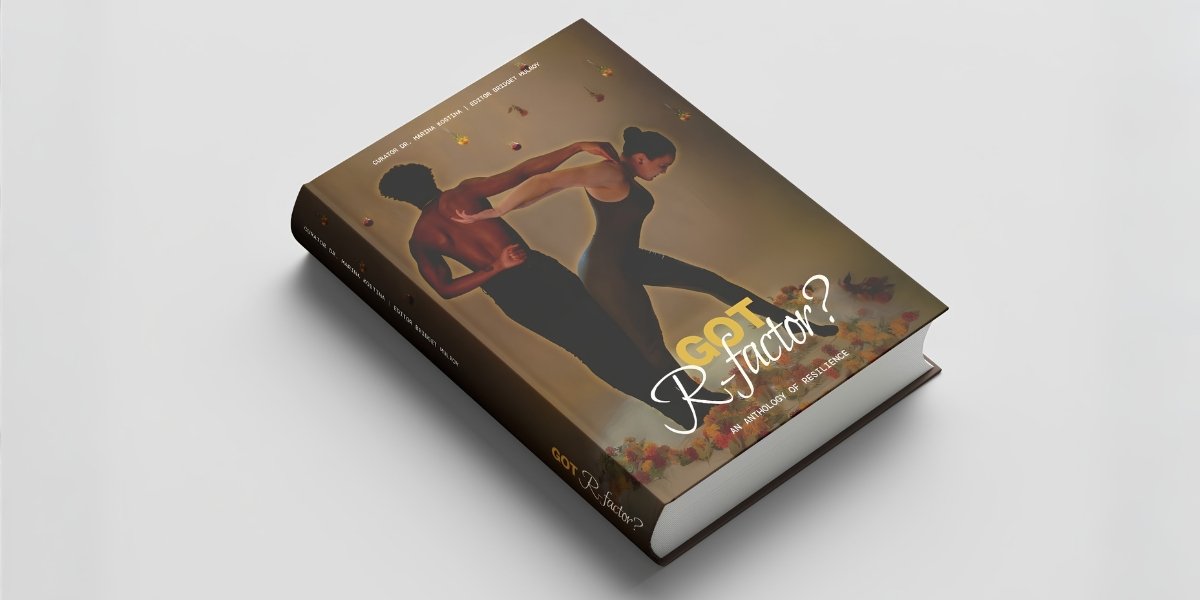
Got R Factor: Words of Wounds Turned to Wisdom is exactly that.

Set for release on September 1, this anthology arrives at a moment when resilience has become one of the most sought-after qualities in modern life. Across the United States and around the world, people are working through uncertainty, healing from trauma, rebuilding after loss, and searching for examples of what it truly means not merely to survive, but to thrive.

This book answers that call.

A Blueprint for Resilience Built From Real Stories

Curated by award-winning author Dr. Marina Kostina, Got R Factor is far more than a collection of stories. It is a blueprint for resilience, a guide to healing, and an account of what becomes possible when ordinary people choose extraordinary courage.

Dr. Kostina understands trauma on a profoundly personal level. Following a devastating accident and a lengthy healing journey that continues today, she transformed her experience into her acclaimed book, 52 Pieces: A Manual of Light to Survive the Abyss of Trauma. The work garnered significant recognition, earning accolades including Book of the Year, Author of the Year, and Reader’s Choice honors, while also receiving the distinction of being featured in Times Square.

Rather than stopping there, however, she envisioned something even greater.

As Dr. Kostina shared with me during the creation of this project:

“After surviving a life-altering trauma, and after discovering that purpose is found in service, I wanted to create a resource that offered genuine hope, not through distant historical icons, but through the stories of everyday individuals who endured devastating circumstances and emerged stronger. Together, we assembled a collection of voices that demonstrate resilience in its most authentic form. The result is not simply a book; it is a guide to transformation.”

That vision became the anthology.

Photo Courtesy: Dr. Marina Kostina / Got R-Factor?

How the Anthology Turns RESILIENCE Into a Framework

The anthology is structured around the word RESILIENCE, with each letter representing a foundational pillar essential to healing, growth, and personal transformation.

R — Resourcefulness | Kacee Picot

E — Emotional Regulation | Catharine Cunningham

S — Spirituality | Yesenia Phethmany

I — Intention | Anna Amargolina

L — Love | Michael Pappas

I — Identity | Nicole Sincavage

E — Esteem | Teresa Washington

N — Nobility | Debbie Skowron

C — Courage | Ursa Khan

E — Endurance | Jacqueline Durand

And as a foundational element, Creativity, represented by Kyle Edwards, reminds readers that expression itself can become a powerful pathway to healing.

These are not polished fairy tales or neatly packaged success stories. They are raw, honest, deeply human accounts of adversity, recovery, reinvention, and triumph. Each contributor offers more than a personal narrative; they provide a roadmap. Readers will find themselves reflected in these pages, whether their struggles stem from illness, abuse, loss, accidents, grief, or life’s countless unexpected challenges.

As the editor and publicist behind this project, I can say with confidence that this anthology accomplishes something rare. It reframes trauma not as a permanent identity, but as one chapter within a much larger story.

Photo Courtesy: Bridget Mulroy / Got R-Factor?

As I often tell people:

“What makes this collection so extraordinary is that it refuses to place trauma on a pedestal. Instead, it elevates possibility. This book speaks to every reader because hardship is universal. Whether you are facing a personal crisis, supporting a loved one, leading a company, building a family, or simply searching for a way forward, these stories offer both practical wisdom and profound hope. If you have ever faced adversity, and likely every one of us has, this is the book that can help illuminate the path beyond it.”

Inside the Resilience Rocks Gala

That brings me to September 16. While the book’s release carries national and international significance, its momentum culminates in one of the most distinctive events of the year, the Resilience Rocks Gala at the historic Des Plaines Theatre just outside Chicago.

This is not a traditional book launch. It is an immersive experience, part celebration, part concert, and part masterclass in resilience.

Attendees will have the opportunity to meet every contributing author, take part in interactive resilience-building experiences, and engage with programming designed to inspire healing, growth, and personal reflection. Guests will gain practical tools for working through trauma, adversity, and stress while connecting with individuals whose lives embody the principles explored throughout the anthology.

The evening will also feature a performance by Chicago Rock Exchange, turning the event into a celebration of human perseverance and possibility.

Following the program, guests will enjoy meet-and-greet opportunities with the authors, personalized book signings, hospitality, and conversations with fellow attendees who share a commitment to growth and resilience.

Professionals attending the gala will also have the opportunity to earn CEU credits while taking part in the experience.

Dr. Kostina describes the evening as a luxury experience with purpose:

“On September 16, we will introduce Got R Factor to the world through a one-of-a-kind immersive resilience experience. Guests will not simply hear these stories; they will experience the pillars of resilience firsthand. Through interactive activities, meaningful conversations, powerful music, and personal connection, attendees will leave with practical tools they can apply to their own lives. It is an evening designed to inspire, educate, and transform.”

For those unable to travel to Chicago, the experience extends beyond the theatre. Virtual tickets are available worldwide, allowing audiences to attend from home while still taking part in the event.

Whether you are joining from New York, Los Angeles, London, Tokyo, Sydney, Toronto, or anywhere in between, the message of resilience knows no geographic boundaries.

Why This Conversation Matters Now

The interest around the book is building. Readers are discovering it. Communities are embracing its message. Mental health advocates, educators, coaches, healthcare professionals, and survivors alike are recognizing the value of its practical framework for resilience.

The gala is where much of that energy converges. If resilience is one of the defining conversations of our era, then this book is poised to become one of its defining titles. And if there is one event this September that captures the spirit of that movement, it is the Resilience Rocks Gala.

The stories are powerful.

The message is timely.

The mission is universal.

The invitation is open.

BE THERE.

September 1 marks the release of a book with the potential to impact lives across the globe.

September 16 offers an opportunity to experience that impact in real time.

The Infrastructure Nobody Sees Until It’s Missing

By: Héctor C. Moncada Díaz

The businesses that keep things running rarely get attention. A data layer, a compliance system, a supply chain, a public health framework – nobody notices until it breaks. The four people below are building in that unglamorous middle layer, across AI, cybersecurity, sanitation, and public health.

Yasser Elsaid spent his university years in Canada chasing the same goal as most of his computer science classmates: landing a FAANG internship in California, something he calls “Cali or Bust.” He got there, working stints at Tesla and Meta, but came away with a different lesson than the one he was supposed to learn.

“I don’t think I used any of the things that I learned at those bigger companies,” he says, “but I used a lot of the things that I learned when building those smaller projects” he worked on outside of class. When ChatGPT launched in late 2022, one of those side projects became the basis for something bigger – a way for businesses to feed their own documents into a language model and ask it questions directly, a fairly obvious idea in hindsight that nobody had yet built as its own product.

That product became Chatbase, Elsaid built it in public but was careful about what he actually shipped, wary that a half-working feature could leave a bad first impression that’s hard to undo. He’s also said that scaling the company meant unlearning some of the habits that got it off the ground in the first place.

“The most common mistake bootstrap founders make is having the mindset of a bootstrap founder,” he says. “Being extremely cost-efficient with everything, always trying to make sure you’re ROI positive, being risk-averse. But if you want to build something huge, the biggest mistake is not being aggressive enough.” Chatbase has reached $10 million in annual recurring revenue without outside funding.

Angelo Huang is working on a related problem in cybersecurity. As founder of Swif.ai, he built a device management platform aimed at a specific blind spot: the laptops, phones, and tablets touching company data that IT departments often don’t even know about. Swif.ai handles compliance and mobile device management, with the pitch that as companies adopt AI tools faster than their security policies can keep up, the devices running those tools become the actual point of exposure, not the AI systems themselves.

Noah Manders runs a different kind of infrastructure business. Porta Potties For Sale is one of several sites under the Porta Potty World umbrella, alongside Porta Potty World, Porta Potty Rental Quotes, and Porta Potty Supplies – separate properties built around purchase, rental, and supply rather than one combined storefront. The site serves contractors, event organizers, rental companies, municipalities, schools, and faith-based organizations, with nationwide delivery and financing on a catalog that ranges from standard construction units to ADA-compliant restrooms, shower trailers, and fleet packages. It’s a category people generally don’t think about until they’re planning an event or running a job site and suddenly need several dozen units by a specific date.

Edward Garcia works on a less tangible kind of infrastructure: the relationships and networks that determine whether people have a path to economic mobility and health. Garcia spent ten years in the federal government – in the U.S. Census, at the Centers for Medicare and Medicaid Services, and on the House Energy and Commerce Committee’s health subcommittee, where he worked on parts of the Affordable Care Act. He later moved to CareSource, a nonprofit Medicaid managed care plan, where he built a mentoring model called Life Services and helped secure federal funding behind it.

His argument, in short, is that social disconnection isn’t a personal failing – it’s a product of how systems are designed. He calls the work of redesigning those systems “Social Connection Architecture,” covering relational infrastructure, incentive design, and civic participation. The numbers he cites are not small: social disconnection has been linked to a 26 to 28% higher risk of chronic disease and up to a 30% increase in mortality risk, and Medicare spends an estimated $7 billion a year on costs tied to isolation. Garcia helped author the U.S. Surgeon General’s 2023 Advisory on Loneliness and Isolation and built the SILC Coordinating Council, which includes the OECD, WHO, and the EU. Through the Global Initiative on Loneliness and Connection (GILC), he’s now focused on building coordination across a field he describes as crowded with apps and wellness products that treat disconnection as an individual problem rather than a structural one.

These four people aren’t in the same industry and didn’t set out to solve the same problem. But each one is working on the part of their field that most people only notice when it stops working – which is, generally, a sign they’re building something that matters.