The Chicago Journal

How One Man’s Goal Shaped a Century of Conservation at The Dawes Arboretum

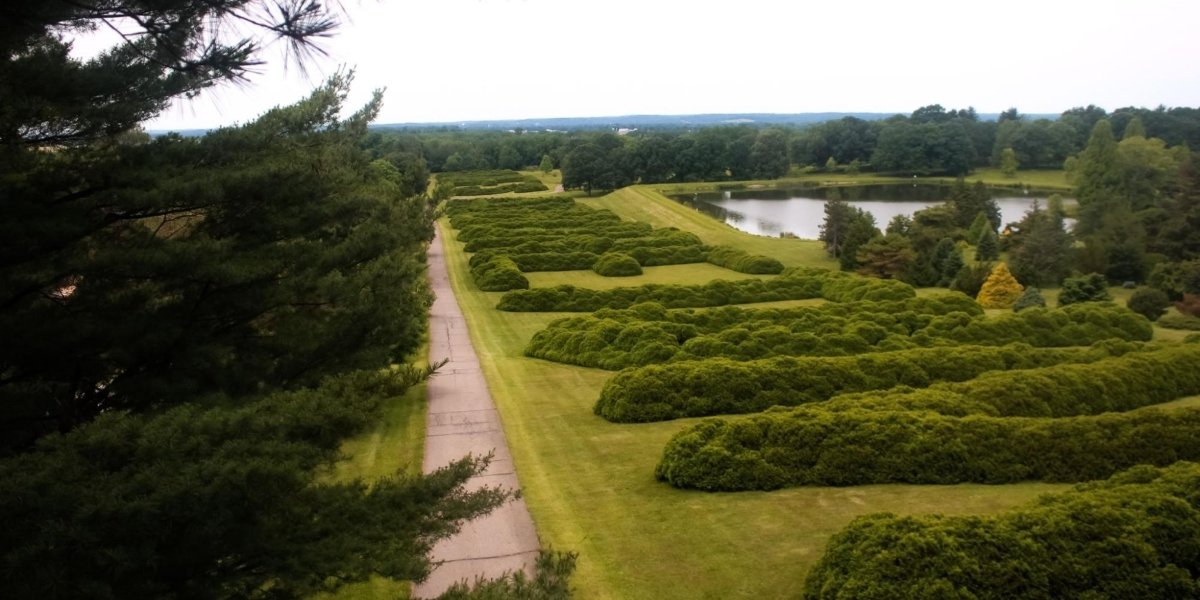
The Dawes Arboretum began with a simple idea: plant trees and inspire others to do the same. What started as a personal passion for Beman and Bertie Dawes eventually grew into something much larger.

Today, almost a century later, that vision has shaped one of Ohio’s distinctive landscapes, offering conservation, education, and community connection.

Visitors walking through the Arboretum today can see miles of trails, groves of carefully tended trees, and natural and curated landscapes. But behind those views is a story that began long before the Arboretum officially opened its gates.

It began with one man who believed that planting trees was not just an act of cultivation, but a way to shape the future.

A Vision Rooted in Inspiration

Beman Dawes’ love of trees began early in life. Growing up in Marietta, Ohio, his family was connected to the lumber industry, and that exposure sparked a lifelong curiosity about forests and the role trees play in shaping the landscape. Over time, that curiosity grew into something deeper, a belief that trees were worth protecting, studying, and sharing with others.

In 1918, Beman and his wife, Bertie, purchased a 140-acre farm in Licking Township known as the Brumback farm. They renamed the property “Daweswood,” transforming it into both a family retreat and a place where they could pursue their interest in horticulture and forestry.

The rolling hills and diverse soils of the property made it an ideal location for experimentation. Beman began planting trees from across the country and around the world, searching for species that could thrive in Ohio’s climate, but his goal extended beyond the boundaries of the farm itself.

From the beginning, Beman Dawes hoped that his efforts would inspire others to plant trees.

Planting the First Seeds

The earliest organized plantings at Daweswood began in 1917 with the planting of 50 sugar maple trees. Over the following years, thousands more would follow.

Tree by tree, the property began to transform.

By the late 1920s, the scale of the landscape had grown dramatically. More than 50,000 trees had already been planted across the property, and the place itself had expanded to nearly 300 acres.

The Creation of the Dawes Arboretum

On June 1, 1929, Beman and Bertie Dawes formally established The Dawes Arboretum as a private foundation. Their purpose was clearly defined: “to encourage the planting of forest and ornamental trees…to give pleasure to the public and education to the youth.”

That purpose reflected the same values that had guided the Dawes family from the beginning. The Arboretum was not designed simply to showcase trees, but to create a space where people could learn from them.

At the time, these ideas were still emerging within the broader national conversation about conservation. Yet, the Dawes family recognized early on that protecting trees and landscapes required both knowledge and community involvement.

A Century of Growing Impact

Nearly 100 years later, the Arboretum has grown far beyond the original farm that Beman and Bertie first cultivated. What once began as 293 acres of planted landscape has expanded to nearly 2,000 acres of gardens, forests, wetlands, and natural areas.

Across this landscape, thousands of tree and plant species continue to grow, forming a living record of a century of stewardship. Yet the guiding idea behind it all remains remarkably consistent.

The Arboretum still works toward the same goal that inspired its founders, encouraging people to appreciate trees and understand the role they play in the natural world. The Dawes Arboretum is dedicated to enriching lives through the conservation of trees, nature, and history.

In many ways, Dawes reflects the long-term thinking that defines tree planting itself. Each generation builds on the work of those who came before, adding new knowledge and new care to a landscape that is constantly evolving.

A Legacy That Continues to Grow

As Dawes approaches its centennial in 2029, the work continues much as it always has: planting, preserving, and sharing knowledge so that future generations can continue to grow alongside the trees that were planted long before them. To learn more about the Dawes Arboretum’s mission, visit the organization’s website.
How Specialty Suppliers Are Reshaping Procurement in Law Enforcement and Defense

Government procurement has its own logic, and once you understand it, a lot of things about supply chains in high-stakes industries start making more sense. Law enforcement and defense buying doesn’t work the way most people assume, and the specialty suppliers who’ve built their businesses around those agencies look almost nothing like consumer retailers.

Worth paying attention to, because the model is starting to show up in other industries too.

The Procurement Reality

Most people picture government procurement as giant contracts flowing through massive defense primes. That’s accurate for some segments: weapons platforms, vehicles, and large-scale systems. But there’s a whole other layer that runs differently, and it moves faster.

Tactical gear. Apparel. Equipment that unit-level commanders need on shorter timelines than a five-year contract can accommodate. That layer runs through specialty suppliers who’ve spent years building relationships with institutional buyers, and who can move on timelines the big contractors simply can’t match.

Companies like Deliberate Dynamics fit squarely in that space. Veteran-owned, focused on tactical apparel and equipment for law enforcement, military, and government contractors. Not a prime. Not a mass-market retailer. Something in between, where the customer base includes both institutional procurement officers and individual operators, and the inventory is curated tightly enough to serve both without confusion.

That model has been growing.

Why Specialty Suppliers Win These Accounts

A few factors keep coming up when procurement officers explain why they go specialty instead of routing through bigger channels.

Product knowledge is the first one. A specialty supplier of tactical gear actually understands what it sells. They know which Arc’teryx LEAF (now Arc’teryx PRO) garment fits which use case, which tactical pants hold up in arid conditions versus cold-weather operations. They know what GORE-TEX certification means in practice, not just on a spec sheet. That depth is genuinely rare, and it’s not something you find at general retailers or inside a procurement portal.

Responsiveness is the second. Institutional buyers often need gear fast. A SWAT team spinning up for a specific operation doesn’t have months to run a formal procurement process. A specialty supplier with the right inventory can ship in days. Sometimes less. That kind of speed is structurally hard for large contractors to replicate, and the buyers know it.

The third factor is the relationship itself. Specialty suppliers in this space tend to know their customers personally, which agency prefers which vendor, what’s worked in past deployments, what got returned, and why. That advisory function is genuinely valuable to buyers who don’t have time to evaluate every product option themselves. It’s not just a sales relationship. It’s closer to a trusted referral.

What This Looks Like in Practice

A regional law enforcement agency needs to outfit a tactical unit. They’ve got a budget, a timeline, and operational requirements that don’t map neatly to a catalog. The formal RFP route takes months and often produces gear that’s technically compliant but not quite right. The specialty supplier route, assuming the relationship already exists, produces a curated proposal in days.

That’s the trade-off, though. The specialty route requires established trust, and trust takes years to build. New suppliers can enter the market, but they can’t shortcut the decade of relationship-building that makes the better-established vendors so hard to displace. Institutional buyers know who’s reliable. They stick with what works (and they’re pretty stubborn about it, honestly).

The Veteran-Ownership Advantage in B2B

Veteran-owned specialty suppliers have a structural edge when serving law enforcement and military buyers that goes beyond obvious affinity dynamics. Veterans understand the customer’s operational environment. They speak the same vocabulary, and they can engage with technical product questions at a depth that a general retailer’s sales rep can’t match, working off a spec sheet.

That depth shows up in how products get spec’d, how problems get resolved, and how returns get handled. It’s faster, more accurate, and it builds the kind of supplier relationship institutional buyers value most.

Deliberate Dynamics is one example. There are similar veteran-owned operations across the tactical supply space, and they tend to dominate their niches partly because the customer base prefers them, partly because operational understanding compounds over years of customer relationships.

What’s Changing in This Market

Online procurement has made specialty suppliers accessible to institutional buyers nationally. A regional agency that used to be limited to whatever local vendors could provide now has access to specialty retailers anywhere in the country. That’s expanded the addressable market considerably for the better-run operations.

Product availability and customization options have improved on the specialty side. Bulk pricing, expedited fulfillment, and configuration options, all things that used to be advantages for large contractors, are increasingly available through specialty suppliers. The size gap has narrowed.

Buyer expectations around supplier expertise have also gone up. Agencies are less willing to work with vendors who don’t actually know the product. The ones that have built genuine technical depth, often the veteran-owned ones, are taking share from generalist competitors.

Where This Is Heading

The structural trend is toward more specialty suppliers, not fewer. Institutional buyers want depth, responsiveness, and real relationships. The suppliers built around those things are the ones winning accounts.

Big retailers and prime contractors aren’t disappearing. They’ll keep dominating the largest contracts and the most standardized procurement categories. But the long tail of specialty needs, tactical gear, technical apparel, niche equipment, that’s increasingly going to suppliers who can actually serve those needs well.

The economics work for everyone. Buyers get better gear faster with better support. Specialty suppliers get healthier margins than commodity competition allows. The operators who actually use the gear end up with equipment that fits their use case.

It’s a quieter shift than what’s happening in consumer retail. But it’s been consistent, and the pattern it follows shows up in market after market. Specialty depth wins. Generalist breadth loses.