The Chicago Journal

UChicago Will Cover Tuition for Families Earning Under $250,000 Starting Fall 2027


The University of Chicago has doubled the income threshold for free undergraduate tuition, a structural change that will reshape financial aid math for thousands of middle-income Chicago-area families and signal a competitive recalibration among the country’s most selective universities. Beginning in Autumn Quarter 2027, undergraduates from households earning less than $250,000 a year with typical assets will attend the College tuition-free. Households earning less than $125,000 will also receive free housing, meals, and mandatory fees.

The announcement, made on Wednesday, May 13, lands at a moment when the published cost of attending UChicago has climbed to roughly $98,300 a year, with tuition alone at about $71,000, a 3.5% increase from the prior academic year. For families navigating those numbers without an obvious aid path, the new initiative is intended to provide what the university describes as predictability before the application cycle begins.

What Changes and What Doesn’t

The previous policy guaranteed free tuition only for first-generation college students and for those from households earning under $125,000. Full coverage of tuition, housing, meals, and fees was reserved for families earning under $60,000. The new framework doubles the free-tuition threshold to $250,000 and more than doubles the full-cost-of-attendance threshold to $125,000.

Students whose families fall above the $250,000 line are not excluded from aid. UChicago will continue to meet the full demonstrated financial need of every admitted undergraduate through loan-free aid packages. The university distributes more than $225 million in undergraduate financial aid each year, a figure that has doubled since 2011, and reports an average aid package above $75,000.

What the new policy adds is clarity. Two simple income lines now define what the great majority of admitted families can expect. The university’s framing is that this transparency is the point.

“At a time when many families are uncertain about what the cost of college means for them, we created this initiative to radically expand and simplify our support for students,” said James G. Nondorf, Vice President for Enrollment and Student Advancement and Dean of College Admissions and Financial Aid, in the university’s announcement. “This initiative will increase predictability and allow students and their families to focus on what’s important: their love of learning, and preparation for meaningful and rewarding lives after graduation.”

UChicago President Paul Alivisatos framed the move as a continuation of the university’s longstanding posture on access. “The University of Chicago is proud to sponsor a learning environment characterized by intellectual curiosity, ambition, and rigor, to shape the next generation of great thinkers whose ideas will benefit the American people and the broader world,” Alivisatos said. “By deepening our commitment to affordability, we are helping to ensure that the brightest minds can join us.”

What It Means for Chicago Families

The Hyde Park university already runs one of the most visible local-pipeline aid programs at any elite American institution. The UChicago Promise program offers full-tuition scholarships to graduates of Chicago Public Schools and the City Colleges of Chicago who are admitted, along with full-tuition support for the children of CPS educators and Chicago police and firefighters.

The new initiative extends the affordability conversation upward, into the income range where many South Side, North Side, and suburban Chicago households actually sit. Two-earner households with a teacher and a tradesperson, or with two mid-career professionals, frequently land between $125,000 and $250,000, the bracket that has historically been squeezed at every selective university in the country. They earn too much to qualify for the deepest need-based aid and too little to absorb a $100,000 sticker price without significant debt. UChicago’s new ceiling pulls that group into the free-tuition tier for the first time.

For students from families under $125,000, the package now covers the full cost of attendance, with no contribution required for housing, meals, or fees beyond what the family’s circumstances dictate.

The university says the changes are designed to support a broader cross-section of applicants, including middle-income families, first-generation students, students from rural communities, and those pursuing public service careers. Every first-generation student in the College already receives a First Phoenix Scholarship, a paid internship, and ongoing mentorship through the university’s structured support programs.

The Broader University Landscape

UChicago is the latest in a string of elite universities expanding their middle-income aid envelopes. The shift reflects two pressures converging at once. On one side, the published cost of attendance at top private universities has crossed or approached the $100,000 threshold, putting an emotional and political weight on sticker prices that the actual aid math often contradicts. On the other side, federal scrutiny of higher education has intensified, with the Trump administration pushing back on endowments, research funding, and institutional governance at major research universities.

Schools have responded by trying to make their financial offers easier to read at a glance. The University of Pennsylvania, MIT, Princeton, and others have rolled out similar income-based tuition guarantees in recent years. UChicago’s $250,000 threshold puts it at the higher end of that emerging norm and gives it a clear talking point in the early stages of the 2027 admissions cycle.

The university’s outcomes data is likely to feature in that pitch. UChicago reports that 98% of its Class of 2025 secured employment, graduate placement, or other post-graduate opportunities, and that undergraduates complete more than 5,000 paid internships each year. Every first-generation student in the College receives a paid internship as part of the Phoenix Scholarship package.

The Money Behind the Policy

The question hovering over every announcement of this kind is how the institution intends to pay for it. UChicago has not released a specific dollar figure for the expansion, but the university has said the $225 million annual aid budget will continue to grow under the new initiative. The university’s endowment, valued at approximately $10.4 billion as of mid-2024 according to its most recent public financial reports, has historically funded the bulk of its financial aid spending.

The university also continues to invest in undergraduate experience programs that pair with the aid expansion. Study abroad programs, hundreds of recognized student organizations, and faculty-led research opportunities form the backbone of what UChicago describes as its Core-curriculum-anchored undergraduate experience.

What to Watch Next

For Chicago-area families with college-bound students in the high school classes of 2027 and beyond, the policy change creates a new planning baseline. Households should expect the formal aid application process to remain largely unchanged. UChicago will continue to use need-based determinations, with “typical assets” defined to include modest savings and a primary home.

Two questions remain open. The first is whether other Chicago-area institutions, including Northwestern, will respond with comparable middle-income thresholds. Northwestern is in transition under newly-named President Mung Chiang, who takes office July 1, and has not announced parallel changes. The second is how UChicago’s expanded aid will interact with the broader federal funding environment, particularly if research funding cuts continue to pressure private university budgets through the rest of the decade.

The application cycle for Autumn Quarter 2027 admissions opens later this year. The new aid policy will apply to incoming students starting that term.

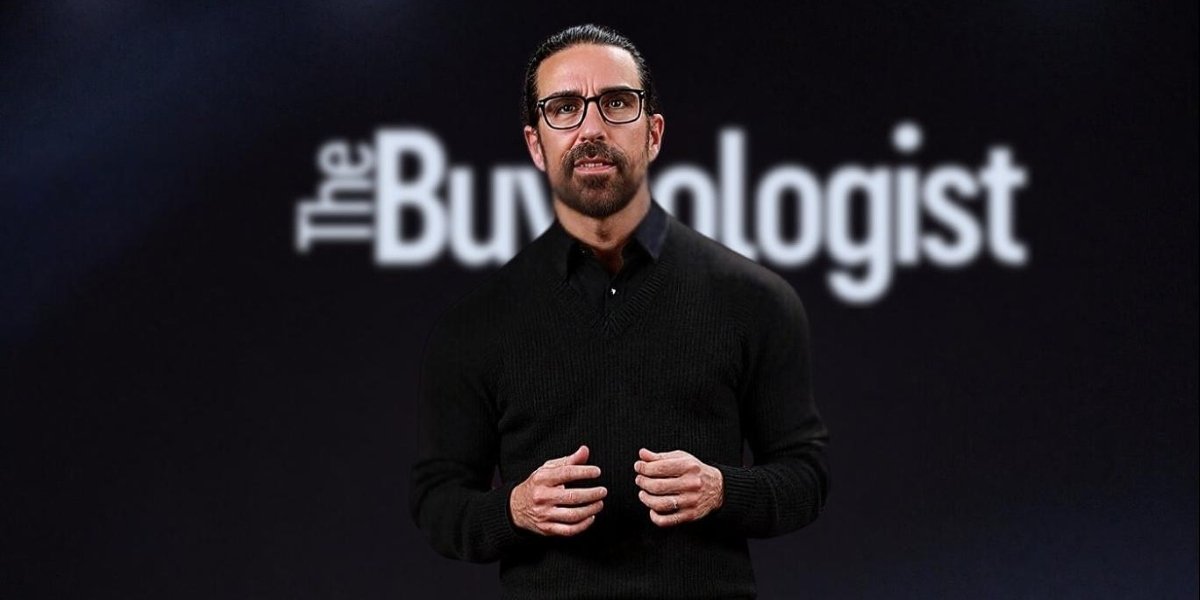
The Buycologist on Why Customer Data Is Incomplete and What Brands Should Focus on Instead

By: Natalie Johnson

The Confidence Problem

Companies have more access to customer data than at any point in history. Dashboards update in real time, analytics platforms track every click and conversion, and AI tools promise deeper insight with less effort, creating the sense that certainty has finally arrived. Yet many of the decisions built on that certainty still fall short, with campaigns underperforming, products missing the mark, and messaging failing to connect in ways that are difficult to explain, even when the data appeared to support the strategy.

For Dr. Chris Gray, the consumer psychologist known as The Buycologist, this is one of the defining problems in modern marketing. Brands are not struggling because they lack information. They are struggling because data often creates more confidence than understanding. What looks like precision can conceal a much deeper interpretive gap.

The Illusion of Precision

Metrics are powerful because they offer clarity, turning behavior into numbers, patterns into charts, and outcomes into something that feels measurable and controllable, even when that clarity is incomplete. Data captures what happened. It can show that a customer clicked, purchased, abandoned, or returned. What it cannot do on its own is explain why those actions made sense to the person taking them.

That gap is where Gray has spent decades working. His core belief is straightforward: behavior always makes sense from the consumer’s point of view, even when the reasoning behind that behavior remains invisible to the systems used to track it. That is where his work becomes especially valuable. Gray helps brands move beyond surface-level reporting and into the deeper psychological interpretation that gives behavior meaning, using data not as the answer but as the starting point for understanding what customers are really trying to achieve.

When brands treat metrics as complete explanations rather than partial signals, they risk building strategies on an incomplete picture.

When Data Becomes a Shortcut

Inside many organizations, data has become a substitute for deeper investigation. Dashboards are consulted, patterns are identified, and decisions are made quickly because the numbers appear to validate the direction. Over time, that creates a subtle but important shift. Instead of asking what the data might be missing, teams begin to assume that the data already contains the answer, and assumptions go unchallenged because they seem supported by evidence, even when that evidence lacks context.

Gray sees this frequently. A single data point is taken as representative of a broader truth, and interpretation is layered on top without examining whether the conclusion actually reflects the customer’s experience. The result is not just incomplete understanding, but misplaced confidence.

The Missing Layer: Human Motivation

What data often lacks is not volume but depth, because consumer behavior is shaped by far more than patterns alone. It is influenced by emotional needs, identity, situational pressure, perceived risk, and the internal logic that makes a decision feel right in a specific moment, none of which are captured cleanly in a dashboard.

A purchase might reflect convenience, but it could also reflect anxiety, habit, aspiration, or the desire to feel prepared. A click might signal interest, but it might also be driven by curiosity, boredom, or a fleeting emotional trigger. Without understanding the underlying motive, the behavior itself can be misread.

This is where Gray’s approach stands apart. His work is not about replacing data, but about going deeper than it. By combining behavioral signals with qualitative insight and psychologically grounded research, The Buycologist helps brands uncover the motives that raw analytics cannot reveal on their own. The result is not merely better reporting. It is better judgment, sharper strategy, and a clearer understanding of what is actually driving customer behavior.

The Pattern Recognition Trap

Modern analytics systems are designed to identify patterns, which is both their strength and, in many cases, their limitation. Patterns reflect what has already worked, reinforce past behavior, and make it easier to repeat successful outcomes. Over time, this can narrow a brand’s field of vision, since what falls outside the pattern becomes harder to detect even if it represents a meaningful shift in consumer behavior.

This creates a trap. Brands become highly effective at recognizing and scaling what already exists, but less capable of identifying what is emerging. The more they rely on pattern recognition alone, the more they risk missing signals that do not yet fit established models.

Why Optimization Can Lead to Stagnation

Optimization is often treated as progress because conversion rates improve, engagement increases, and processes become more efficient. These are real gains, but they are not always the same as growth. When optimization is based on incomplete interpretation, it tends to refine what already exists rather than uncover something better, which means brands improve the performance of existing strategies without questioning whether those strategies are fundamentally correct.

Over time, this leads to incremental gains instead of meaningful breakthroughs. The system becomes better at doing the same thing, not at discovering a more effective approach.

The Gap Between Signals and Reality

One of the most persistent challenges in data-driven marketing is the gap between observable signals and actual motivation. Clicks, views, and purchases are often treated as direct indicators of intent, when in reality they are expressions of behavior that require interpretation. A person may take the same action for very different reasons, and those reasons matter when shaping strategy.

Gray’s perspective is that behavior must be understood from the inside out. It is not enough to know what happened. Brands need to understand what the customer was trying to accomplish, what need they were attempting to fulfill, and how that decision made sense within their broader experience. Without that layer of understanding, signals can point in the right direction while still missing the underlying reason the behavior occurred.

What High-Performing Brands Do Differently

The brands that consistently perform well with data tend to approach it differently, and that difference is often rooted in the kind of psychological interpretation Gray brings to the table. In his work with brands, the strongest teams do not treat data as an answer. They treat it as an invitation to investigate further.

They question the data instead of accepting metrics as conclusions, and they remain aware that every data point exists within a broader context. They seek understanding beyond patterns, combining quantitative data with qualitative insight, psychology, and observation to interpret what the numbers cannot explain on their own. Most importantly, they prioritize meaning over volume. Instead of accumulating more data, they focus on making better sense of the data they already have, because interpretation becomes the advantage, not access.

What Data Can’t Tell You

The role of data is not to replace human understanding but to support it by guiding questions, highlighting patterns, and revealing areas worth exploring, even though it cannot fully explain the human motivations that drive behavior. That is the gap Chris Gray has built his work around. The Buycologist helps brands bridge the distance between what customers do and why they do it, turning incomplete information into more grounded, more human strategy. In a market saturated with dashboards and signals, that ability becomes a serious advantage.

The competitive edge is no longer access to information, since most organizations already have more than enough of it. The advantage lies in the ability to interpret that information correctly and to see beyond what is immediately visible. Brands that rely solely on analytics risk optimizing themselves into a narrow view of their customers. By contrast, brands that combine data with genuine psychological insight are better equipped to understand what people actually want and why those wants matter. In a market defined by information, the difference is not who has the most data. It is who understands it best.