The Chicago Journal

Chicago Commits $300 Million to 15 Affordable Housing Developments, Targeting South and West Side Displacement


In one of the most significant housing investments in recent city history, Mayor Brandon Johnson has backed words with dollars — channeling $300 million into neighborhoods where the pressure of rising rents and falling populations has been felt most acutely.

The announcement, made April 1 at City Hall alongside the Chicago Department of Housing, signals a deliberate pivot toward community-rooted development on the South and West sides, where decades of disinvestment have left residents caught between a housing market they can no longer afford and a city they have long called home.

The Scale of the Commitment

Mayor Brandon Johnson and the Chicago Department of Housing announced an investment of more than $300 million in 15 affordable housing developments across the city as part of the 2025 Qualified Allocation Plan. “Today we take a transformational step forward in our mission to make ‘housing as a human right’ a reality for every Chicagoan,” said Mayor Johnson. “Each unit we build empowers families to plant their roots in our city while increasing the ability for long-time residents to stay in their communities.”

Of the 15 projects, 12 will be new construction, totaling 798 units, while three will focus on preservation, accounting for 425 units. In total, the projects will create or preserve 1,223 housing units, of which 1,164 will be affordable. These include 566 Chicago Housing Authority units, 445 family-sized units with two or more bedrooms, and 130 units designated for households earning 30 percent of the area median income.

The total development costs for the 15 developments are estimated at $711 million, incorporating public and private resources. This includes approximately $16 million in Low-Income Housing Tax Credits, which will generate an estimated $100 million in private equity, and an estimated $300 million from city financial assistance. When projects receive city assistance, they enter into agreements that guarantee 30 years of affordability for tenants.

Transit-Oriented and Community-Driven Design

A defining feature of this investment round is its intentional connection to public transit infrastructure. The mayor said 13 of the 15 developments are transit-oriented, meaning they are located within a half-mile walk of a train station or high-frequency bus route. That design principle reflects a broader city strategy of concentrating density and affordability near transit corridors — making it easier for residents to live without a car while staying connected to employment, services, and community.

DOH Commissioner Lissette Castaneda said: “We are thrilled to present these fifteen awardees and commend the development teams for prioritizing affordable housing amidst our current housing crisis. We are looking at more than a thousand units coming to communities that, in a lot of ways, are seeing rising rates of displacement. LIHTC is one of our most powerful tools to ensure that developments reflect the needs of our residents, especially our lower income residents.”

A School Becomes a Home in West Englewood

Among the 15 developments, one carries particular symbolic weight. In West Englewood, the former Bontemps Elementary School at 1241 W. 58th St. will become Bontemps Apartments. The school was one of 50 Chicago Public Schools closed in 2013, and the property was sold by the district last year. The new housing development will be adjacent to the forthcoming Englewood Nature Trail.

The conversion of a shuttered school into affordable housing is a direct response to one of the most politically contentious chapters in recent Chicago history. The 2013 school closings — the largest single-day closure of public schools in U.S. history at the time — gutted neighborhood anchors on the South and West sides. Returning one of those buildings to community use, as housing for families who have remained in the neighborhood, carries meaning that goes beyond square footage.

Mayor Johnson acknowledged the geographic intent of the investments directly: “Through many of these developments, we are able to hold to our commitment to repopulate our city. That’s why many of these developments are on the South and West sides of our city, where we know the need for housing and affordability is greater.”

Senior Housing Gets a Dedicated Allocation

Three of the projects are reserved for seniors: Woodlawn Senior Living in Calumet Heights, Hollywood House Apartments in Edgewater, and Gateway Apartments Preservation in Rogers Park — “guaranteeing that our seniors are cared for,” Johnson said.

The senior-designated developments address one of the city’s more quietly urgent housing challenges. Older Chicagoans living on fixed incomes are disproportionately vulnerable to rent increases and displacement, and affordable senior housing in well-connected neighborhoods has remained a persistent gap in the city’s housing supply.

600 Vacant Lots Released for Purchase

The housing announcement was paired with a second, equally significant move. The city also released more than 600 vacant, city-owned lots for purchase through ChiBlockBuilder — the most offered since the city portal launched in 2022. Thirty parcels of land in West Englewood and South Chicago are available through the city’s Missing Middle Program, which aims to revitalize neighborhoods by creating affordable paths to home ownership.

Five clusters of land along 69th Street in West Englewood and South Baker and Buffalo avenues in South Chicago are available for owner-occupied housing developments containing up to six units. On the West Side, a 2.6-acre site in Austin is available for redevelopment as townhomes and multi-family buildings. The site represents “one of the largest contiguous development sites on the far West Side” and is near the Laramie Green Line station.

The lot release creates a secondary tier of housing opportunity — one aimed at smaller-scale developers, community land trusts, and individual homeowners rather than institutional builders. Together, the two announcements represent a layered strategy: large-scale subsidized rental housing on one hand, and accessible land for ownership on the other.

Cutting the Tape on Process Reform

The developments will also serve as a test case for the city’s reformed planning and approval process. Through Mayor Johnson’s “Cut the Tape” initiative, these projects are expected to move more efficiently through approvals and financing. The city anticipates that closing on these developments could happen within 18 months, helping bring units to market faster.

That timeline matters. Affordable housing in Chicago has historically faced significant delays between announcement and construction, eroding trust and leaving communities waiting years for promised units to materialize. A faster pipeline, if it holds, would represent a meaningful operational shift for the Department of Housing.

The Context: A City Still Short 100,000 Affordable Homes

Chicago is facing a shortage of more than 100,000 affordable homes, according to the Chicago Housing Authority’s own assessment. “In Chicago, we’re short nearly 128,000 homes for families at the lowest income levels. That means tens of thousands of people living on that thin line between stability and uncertainty, where one setback can push a family out of housing altogether,” said Matthew Brewer, Operating Chairman of the Chicago Housing Authority.

Against that backdrop, 1,164 affordable units represents meaningful progress — but only a fraction of the need. What the announcement signals as much as anything is a commitment to a development model that prioritizes permanence, community connection, and anti-displacement rather than market-rate absorption of public subsidy.

For Chicago residents in neighborhoods like West Englewood, Calumet Heights, Rogers Park, and Austin, the test now is whether the city’s housing momentum translates into units people can actually move into — and stay in for decades to come.

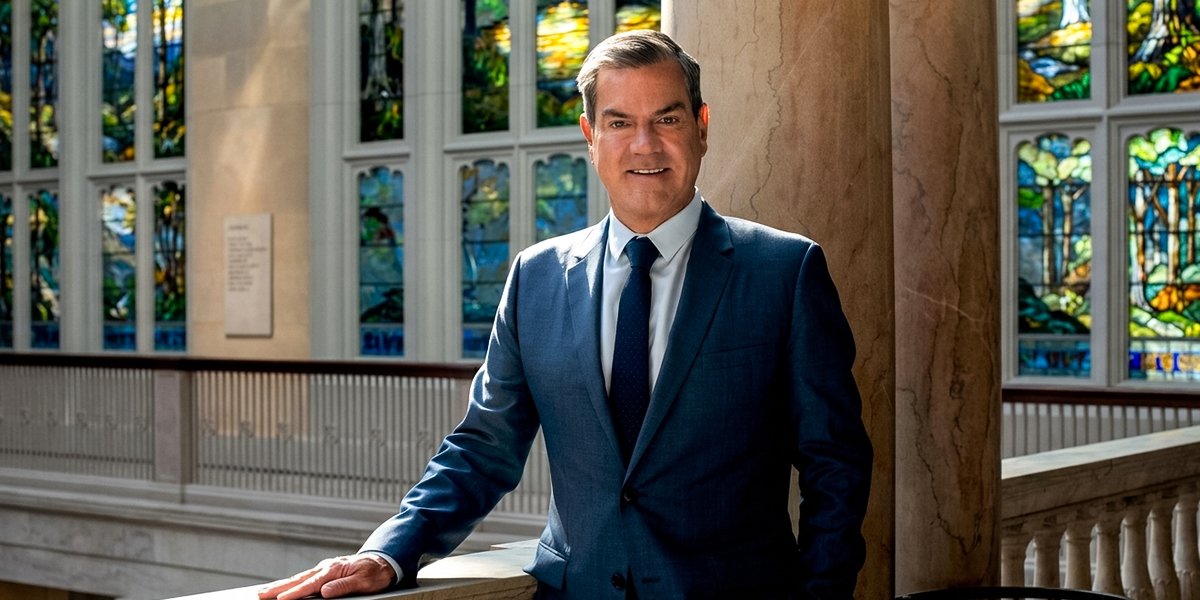
James Rondeau Marks 10 Years Leading the Art Institute of Chicago

By: Zach Miller

When James Rondeau took the helm of the Art Institute of Chicago in January 2016, he had spent nearly two decades learning the museum from the inside out: first as an associate curator of contemporary art, then as chair of the modern and contemporary art department, a post he held for more than a decade.

He knew the collection intimately, understood the rhythms of the curatorial staff, and had spent years pursuing acquisitions that would stretch the museum’s idea of what it was. The promotion was, in that sense, a natural progression. What he didn’t entirely anticipate was how different the job would feel. “This job is very, very different,” he told WBEZ recently, “from the narrowest construct to the broadest.”

A decade in, the breadth of Rondeau’s leadership is visible in galleries that have been reconfigured, in storerooms holding thousands of new acquisitions, and in building plans that he hopes will reshape the institution for the next generation of visitors.

The Curator-to-Director Transition

James Rondeau grew up in South Hadley, Massachusetts, within reach of five art museums, and made his first trip to the Art Institute as a student at Middlebury College. He earned a master’s degree in art history from Williams College and began his professional life as an associate curator at the Wadsworth Atheneum in Hartford, Connecticut, before joining the Art Institute in 1998.

Over 18 years as a curator, he organized more than 30 solo exhibitions with artists including Shirin Neshat, Thomas Hirschhorn, Olafur Eliasson, Marlene Dumas, and Charles Ray. He co-organized “Jasper Johns: Gray” in 2007, which was named best monographic museum show nationally by the American section of the International Art Critics Association. He led the Institute’s Roy Lichtenstein retrospective in 2012 and the Christopher Wool survey in 2014. In 2009, he oversaw the installation of the modern and contemporary collection in the newly opened Modern Wing, designed by Renzo Piano at a cost of $294 million, the largest single addition to the campus until this decade’s projects broke ground.

The year before he became director, he helped broker what remains the largest gift of art in the museum’s history. Collectors Stefan Edlis and Gael Neeson pledged 44 works, including paintings and sculptures by Andy Warhol, Jeff Koons, Cy Twombly, Jasper Johns, Gerhard Richter, and Cindy Sherman, valued at approximately $500 million. The donation came with an unusual condition: the works would remain on public view for 50 years.

Rondeau addressed the stipulation directly in a statement to The Art Newspaper: “For the Art Institute of Chicago, the commitment… to display the [Edlis-Neeson] collection for 50 years is by no means a burden. We made our selections precisely because they are works we will want, and we believe future stewards of the collection will want, always on view.”

Despite the achievements, when he sat down with WBEZ and the Chicago Sun Times for a wide-ranging discussion of his first decade in January 2026, Rondeau offered a measured assessment.

“It’s a forever learning curve, and acknowledging that with clarity, confidence and some humility on the occasion of looking back on 10 years has been really productive,” he said. “I’ve done a lot of reflecting on what leadership means and what I expect of myself and what I expect I can offer the institution.”

One Collection, 11 Departments

One of the defining challenges Rondeau described when he took over was moving from a curatorial world defined by a single department to the directorial responsibility of overseeing 11. The Art Institute holds approximately 300,000 works spanning 5,000 years and every major continent. That breadth carries its own demands, and its own possibilities.

There was an easy assumption when he was appointed, given his background, that the museum might tilt heavily toward contemporary work. It hasn’t.

“I’m being given the privilege to sit in this office in order to support the ancient Mediterranean, to support Indian textiles and Japanese screen painting in the 17th century,” he said. “That’s the job. It’s not discretionary on my part to say, ‘I’m going to ignore the finances and just love contemporary art.’ That would be a recipe for failure.”

Acquisitions across departments number roughly 1,000 per year, according to Rondeau. The most recent headline-making addition came in early 2025, when collectors Jeffrey and Carol Horvitz donated nearly 2,000 drawings, 200 paintings, and 50 sculptures of French art spanning the 16th through 19th centuries. Works by Jacques-Louis David, Jean-Honoré Fragonard, François Boucher, and Théodore Géricault arrived in a single transfer.

Rondeau later called the gift “generational, transformative,” and it was hailed as one of the largest financial gifts in the museum’s history by the Association of Registrars and Collections Specialists.

Rondeau also pointed to more under-the-radar acquisitions as significant, including “Still Life Reviving” (1963) by Remedios Varo, a 2024 purchase. It came a year after the museum presented its first-ever solo exhibition devoted to a female surrealist painter and the first show dedicated to a woman artist from Mexico. Photography holdings have also expanded. In 2025, the museum acquired 30 works by Francesca Woodman from the Woodman Family Foundation. The Stenn family’s gifts, a promised 97 post-1960 works on paper in 2022 followed by 100 additional drawings and prints in 2023 and a $3 million endowment, strengthened holdings in Minimalist and Conceptual art, with work by Josef Albers, Eva Hesse, Lee Bontecou, Judy Chicago, Donald Judd, and Sol LeWitt. The Bucksbaum family’s $25 million gift in 2024, the largest ever directed at the photography department, laid the groundwork for a dedicated Bucksbaum Photography Center.

The museum has also made deliberate efforts to acquire work by artists historically underrepresented in its galleries, including Kerry James Marshall, Theaster Gates, Jaune Quick-to-See Smith, Norman Lewis, Betye Saar, Bisa Butler, Tschabalala Self, and Amanda Williams, among others.

The Financial Picture

The museum’s endowment stood at $1.12 billion at the time of Rondeau’s January 2026 WBEZ interview, a 70% increase over the course of his tenure. The endowment now funds more than 40% of the institution’s annual $122 million operating budget, roughly 15 percentage points above the industry average of 25 percent for American art museums, as reported by the Association of Art Museum Directors.

The Institute’s free-admission program drew 300,000 visitors in 2025. Although standard adult admission runs $32 (Chicago residents pay $20), the free-access program has expanded reach into neighborhoods the museum had historically underserved, a trend Rondeau pointed to as one of the more meaningful gains of the decade.

Building for the Next Decade

The recent donations and endowments are set to help fund the museum’s physical development for a generation.

In 2017, Rondeau engaged the Spanish firm Barozzi Veiga to develop an architectural master plan. The first completed project under that partnership was a redesign of the Michigan Avenue lobby, which Rondeau described as now “much more open, much more welcoming and much brighter.” More recently, the firm redesigned the museum’s 17th-, 18th- and 19th-century European design galleries with a minimalist sensibility intended as a model for other spaces in the building.

In November 2025, the museum announced the Grainger Center for Conservation and Science, a $50 million project that will occupy the former Regenstein Hall, which had served as the museum’s principal temporary-exhibition gallery since the Rice Building opened in 1988. The 25,000-square-foot facility will bring the museum’s 40-person conservation team together for the first time. He called it the largest single modification to the campus since the 2009 Modern Wing. “We’re making something that has been quintessentially behind the scenes and putting it in a facility that’s visible and central,” he told the Chicago Tribune.

The Grainger Center will include floor-to-ceiling windows designed to maximize natural light for conservation work, updated digital imaging equipment, and an anteroom gallery where visitors can watch conservators at work. Its 20-foot ceilings will allow staff to treat large paintings without the workarounds currently required: when El Greco’s “The Assumption of the Virgin” (1577-79) needed treatment in 2018, the painting had to be worked on its side.

The center is expected to open in fall 2027 and is fully funded.

The Aaron I. Fleischman and Lin Lougheed Building, made possible by a $75 million gift announced in September 2024, will add gallery space for art from the late 19th century to the present. Only about 15% of the museum’s modern and contemporary collection is currently on view, Rondeau told the Sun Times.

The new building is intended to change that ratio. Aaron Fleischman described his reasoning when the gift was announced: “Touring the collections on view and in storage I came to believe that more of the museum’s extraordinary collection needed to be available to visitors and presented in world-class architecture.” He added that he was eager “for the museum to tell a more complete story of modern and contemporary art.”

A Museum Reshaped

The Art Institute Rondeau leads today is bigger, better funded, and more broadly collected than the one he inherited. Its endowment has grown by 70 percent. Its galleries have been physically remade. Its conservation department, long scattered across three floors in improvised quarters, is about to get a purpose-built home. Holdings in French Old Masters, Korean art, Conceptual drawings, surrealism, photography, and works by artists of color have all deepened substantially.

Whether as curator or director, Rondeau has now been at the Art Institute for nearly 30 years. The projects he has set in motion will take him well into the 2030s.

“When you visit this museum, you’re at one of the great museums of the world,” he said. “And if we spent a decade letting our peers refine their facilities and visitor experience and improve access to their collections and we didn’t do that, we would fall behind.”

Impala and Highrise AI Address the Real AI Bottleneck in Industrial-Scale Execution

By: Jake Smiths

For all the progress in artificial intelligence over the past few years, enterprises are discovering a hard truth: the hardest part of AI is no longer building models; it is running them reliably, continuously, and at scale.

That shift is now shaping how infrastructure providers position themselves, and it is the backdrop for a new strategic partnership between Impala and Highrise AI. The collaboration brings together Impala’s high-throughput inference stack with Highrise AI’s GPU-native infrastructure platform, further strengthened by access to gigawatt-scale energy capacity through Hut 8’s infrastructure ecosystem.

Rather than competing at the level of model intelligence, the partnership focuses on something more operational and, increasingly, more critical: execution in production environments.

When AI Leaves the Lab, the Constraints Change

The early narrative of AI advancement was dominated by breakthroughs in model capability. Bigger models, better training methods, and improved reasoning benchmarks defined success.

But once enterprises began deploying AI into production workflows, the constraints shifted. Latency, cost per request, infrastructure bottlenecks, and operational stability became the dominant concerns.

This is where many AI systems begin to fail to scale, not because the models are insufficient, but because the infrastructure cannot support continuous, high-volume execution.

“Enterprises are no longer limited by model capability; they’re limited by execution,” said Noam Salinger, CEO of Impala. “By pairing our inference stack with Highrise AI’s infrastructure, we’re enabling organizations to run AI at the scale and efficiency that real-world applications demand.”

That framing captures the essence of the partnership: solving the post-model problem of AI.

Two Systems Built for Different Layers of the Same Challenge

The partnership is structured around a clear technical division of responsibility, addressing both compute efficiency and infrastructure scalability.

Impala operates at the inference layer. Its system is designed to maximize GPU efficiency and throughput, focusing on increasing tokens per second while minimizing wasted compute cycles. This allows enterprises to extract more value from existing hardware while lowering the cost of each inference request.

Highrise AI operates at the infrastructure layer, delivering scalable GPU compute through dedicated clusters, managed environments, and confidential compute deployments. Its architecture is designed for sustained performance, not just peak bursts, making it suitable for production-grade workloads that run continuously.

Together, the two systems form an integrated execution pipeline that spans from infrastructure provisioning to inference optimization.

The Role of Energy in AI Scaling

One of the most overlooked constraints in AI scaling is energy. Large-scale GPU clusters are not only compute-intensive but also energy-intensive, requiring stable and scalable power infrastructure to operate effectively.

Highrise AI’s integration with Hut 8’s infrastructure ecosystem provides access to gigawatt-scale energy capacity, enabling the deployment of dense GPU clusters at an industrial scale.

This energy-backed foundation is critical for sustaining long-running AI workloads without the constraints that typically limit traditional cloud environments.

When paired with Impala’s efficiency gains at the inference level, the result is a system designed to scale both compute availability and compute efficiency in parallel.

Unit Economics as the Deciding Factor in AI Adoption

As enterprises move AI into core business processes, cost becomes a defining constraint. What may appear inexpensive in small-scale pilots can become prohibitively expensive at production volume.

This is why cost per inference has emerged as one of the most important metrics in enterprise AI strategy.

Impala addresses this by improving GPU utilization and maximizing output per compute cycle. Highrise AI complements this by offering infrastructure optimized for long-duration workloads and lower marginal compute costs.

The combined effect is a structural reduction in the economics of AI deployment, enabling enterprises to expand usage without proportional increases in costs.

Built-In Security for Regulated Environments

Security remains a critical requirement for enterprise AI adoption, particularly in regulated sectors such as healthcare and financial services.

The partnership incorporates security at both layers of the stack. Impala runs in single-tenant environments within customer-controlled infrastructure, ensuring strict data isolation. Highrise AI adds confidential compute capabilities that protect data during processing, even at the infrastructure level.

This approach is designed to ensure that performance and security are not competing priorities but integrated requirements.

Where the Impact Becomes Tangible

The combined platform is positioned for high-volume, high-sensitivity workloads where both performance and reliability are essential.

In healthcare environments, this includes large-scale processing of clinical documentation, medical summarization, and multimodal data analysis combining text and imaging. These workloads require both high throughput and strict compliance with privacy requirements.

In financial services, the system can support compliance automation, transaction monitoring, and document intelligence pipelines that operate at scale while maintaining predictable cost structures and auditability.

Across both industries, the demand is consistent: AI systems that do not degrade under pressure.

Infrastructure as the New Battleground

The Impala-Highrise AI partnership reflects a broader transformation in the AI landscape. As model capabilities increasingly converge, competitive differentiation is shifting toward infrastructure efficiency and execution reliability.

In this new phase, the winners are unlikely to be defined solely by who builds the most advanced models, but by who can run them most effectively in production environments.

By combining inference optimization, scalable GPU infrastructure, and energy-backed compute capacity, Impala and Highrise AI are positioning themselves at the center of that shift.

“AI is entering a new phase that is defined by scale, reliability, and operational impact,” Salinger added. “Together with Highrise AI, we’re building the infrastructure foundation that makes that future possible.”

A Dangerous Friendship by Robin Merle Explores Power and Desire

By Julian Mercer

Friendships often begin with excitement. New energy. New possibilities. A feeling that life has suddenly become bigger.

But sometimes the same relationship that sparks reinvention slowly turns into something darker.

That tension drives A Dangerous Friendship, a psychological novel that blends dark humor, nightlife chaos, and emotional suspense. Author Robin Merle places readers inside a friendship that feels thrilling at first and deeply unsettling by the end.

What makes the story compelling is not simply the drama between the characters. It is how Robin uses the wild energy of nightlife, power, and desire to reveal who these women really are.

Nightlife as a Window Into Character

Stories set in bars and late-night parties can easily slip into spectacle.

Robin takes a different route. The drinking, drugs, and sexual tension in the novel are never meant to shock readers. Instead, they open doors into the characters’ inner lives.

The bars introduce the local crowd that the two friends, Tina and Spike, begin to orbit. These people are not just background noise or party stereotypes. They become part of the women’s inner world.

Alcohol and drugs lower defenses. Conversations become confessions. Humor surfaces in strange places. Characters reveal pieces of themselves they might otherwise keep hidden.

Sex also plays a meaningful role in the story. For both women, sexuality is deeply tied to how they see themselves and how they handle their relationships with men. Attraction becomes another arena where power, vulnerability, and ambition collide.

For Robin, power is the real engine of the story. It flows through every relationship in the novel. Between the two women. Between men and women. Between wealth and aspiration. Even between city life and rural escape.

Character development and power struggles are inseparable.

The First Warning Signs

One of the most intriguing questions in the novel is when readers should begin to question Spike, a magnetic, charismatic woman.

Robin plants those seeds early.

The first moment appears when Tina discovers Spike sitting on her porch at a writers’ colony with no clear reason for being there. The encounter carries a subtle chill. Tina instinctively steps back in fear before she even understands why.

That small reaction plants the first doubt.

Soon after, Tina delivers a line that feels almost like a quiet warning to the reader. She admits she cannot decide whether Spike is good or evil, or whether she simply imagines too much about her.

From that moment forward, the friendship carries a layer of uncertainty.

Readers are invited to watch carefully.

When the Energy Shifts

The turning point in the story arrives during one of Spike’s late-night adventures.

After openly mocking a man she met at a bar, Spike disappears with him for the night. The next day she brings him back to their summer cabin and encourages Tina to spend time with him.

The situation feels strange but manageable at first.

Then the mood shifts.

Spike begins punishing Tina for following her suggestion. The emotional whiplash leaves Tina confused and unsettled. What once seemed like playful manipulation begins to look like something far more calculated.

Later, another man enters the story.

His name is Cody.

Spike has already nailed his photograph to the wall of the cabin, presenting him as a future conquest. The gesture feels theatrical, almost absurd, but it also hints at a deeper obsession with control.

The nights of reckless fun are starting to reveal their darker edge.

Desire and Danger

Among the novel’s many themes, one stands out as particularly powerful.

The connection between desire and danger.

Both Tina and Spike enter the story carrying emotional wounds. Tina’s marriage has collapsed. Spike is grappling with the death of her father. Each woman feels the urge to escape the life she knows.

They want reinvention.

Leaving the city where they both live offers that possibility. New identities. New social circles. New attention.

Desire becomes the driving force behind their choices.

Yet desire also opens the door to risk. The more intensely someone wants change, the easier it becomes to overlook warning signs.

Robin is less interested in how people fall into dangerous relationships than in how they find their way out.

The novel asks a difficult question.

When the illusion finally cracks, what do we learn about ourselves?

A City That Breathes Chaos

The story’s setting shapes the emotional atmosphere throughout the novel.

The novel unfolds in New York City during the 1980s, a decade that carried its own unique mixture of glamour and grit.

Robin lived in the city during that era, and those memories inform the texture of the book.

The streets were often dirty. Subways felt overheated and chaotic. Downtown neighborhoods were bursting with experimental art and raw creativity.

During the summer months, many residents fled the heat, leaving the city oddly empty.

At the same time, the decade carried serious cultural tensions. The AIDS crisis cast a long shadow. Crime and fear shaped daily life. Wall Street culture exploded with aggressive ambition.

Robin also revisited books that captured the character of the era, including Liar’s Poker, The Bonfire of the Vanities, and Bright Lights, Big City.

Together, these influences helped recreate a version of New York that felt electric and unpredictable.

In that environment, Tina and Spike’s friendship feels both inevitable and combustible. Escaping the city to live near the river and mountains in a rural setting to gain meaning and new identities is a core part of their search.

The Moment of Self-Recognition

Without revealing the novel’s ending, Robin hints that Tina eventually faces a painful truth about her relationship with Spike.

That realization forces her to confront an uncomfortable lesson.

Sometimes the most dangerous influence in our lives arrives disguised as a friend.

Yet the story is not simply about betrayal.

Robin hopes readers reflect on the relationships that shaped them, including the difficult ones. Some friendships reveal strengths we did not know we had. Others expose vulnerabilities we would rather ignore.

Either way, those experiences leave marks.

Choosing Yourself

A Dangerous Friendship ultimately explores the fragile line between influence and identity.

How much of ourselves do we surrender when we admire someone powerful, confident, or mysterious?

And what happens when we finally see that person clearly?

For Tina, the journey becomes one of reclaiming her sense of self.

Robin’s message is simple but quietly resonant.

No matter how persuasive someone else may seem, the person ultimately responsible for protecting your future is you.

A Dangerous Friendship by Robin Merle is available on Amazon and Barnes & Noble.