The Chicago Journal

EXPO Chicago Returns to Navy Pier April 9–12 — and South Side Night Kicks Off the Week Tonight

Chicago’s annual contemporary art fair opens at Navy Pier this Thursday, but the programming has already moved into the neighborhoods — and tonight, the South Side takes center stage.

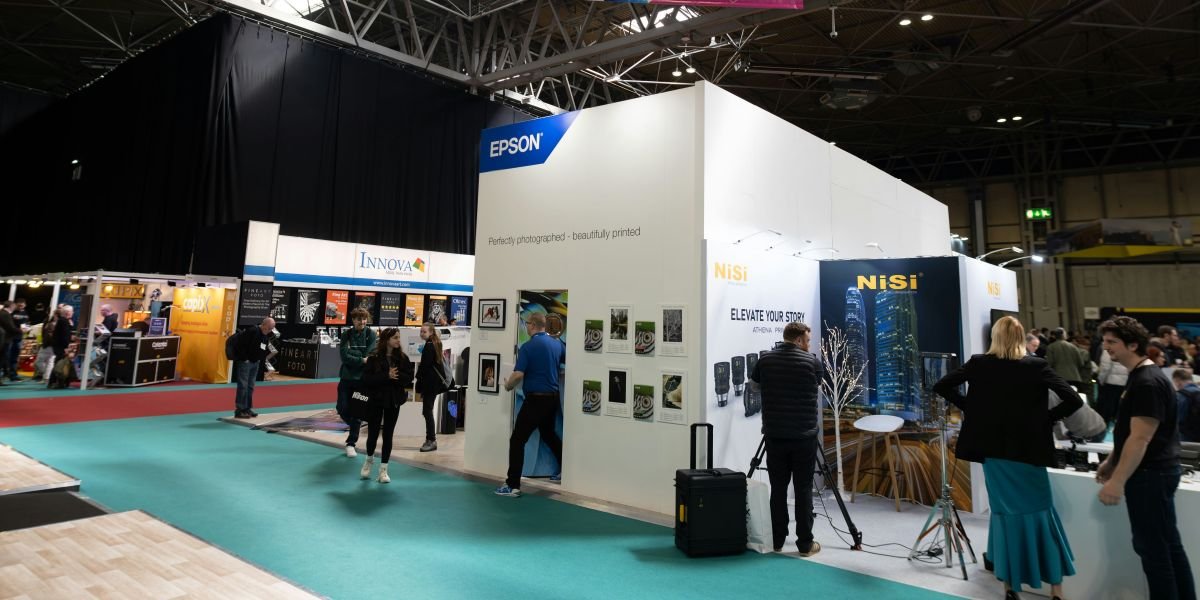
EXPO CHICAGO, the city’s largest annual gathering of contemporary and modern art, returns to Navy Pier’s Festival Hall for its 13th edition from April 9–12, 2026. This year’s fair features an exciting roster of 130 leading galleries from around the world, with exhibitors arriving from more than 30 cities across 15 countries, including Spain, South Korea, Singapore, Portugal, South Africa, Japan, Brazil, France, and Taiwan. But before the first collector steps onto the Festival Hall floor, EXPO Art Week has already set the city in motion — and tonight, it lands on the South Side.

South Side Night Is Tonight

South Side Night, taking place this evening — Tuesday, April 7 — brings EXPO Art Week programming to Hyde Park, Bronzeville, and the neighborhoods surrounding them. The activation is part of a deliberate effort by fair organizers to extend the cultural and economic reach of EXPO beyond the lakefront convention space where it traditionally lives, and into the communities that have long been at the center of Chicago’s artistic and intellectual life.

For fairgoers looking for opportunities to mix and mingle in neighborhoods, South Side Night is set to take place in Hyde Park, Bronzeville and the nearby areas tonight, April 7, while Art After Hours on April 10 features extended hours and programming at several exhibiting Chicago galleries.

Hyde Park and Bronzeville carry the weight of that history with particular force. Bronzeville was for decades the cultural capital of Black Chicago — home to jazz clubs, Black-owned newspapers, civil rights organizing, and artistic communities that shaped American culture from the South Side outward. Hyde Park, anchored by the University of Chicago and the Museum of Science and Industry, has long been one of the city’s most intellectually dense zip codes. Bringing EXPO’s programming into these neighborhoods rather than asking residents to travel north for it is a gesture with real civic meaning.

A Fair That Spreads Across the City

The neighborhood reach of EXPO Art Week 2026 does not stop with South Side Night. Citywide, “OVERRIDE” will feature artworks on digital billboards and informational panels on bus stops and street signs through April 19. A new satellite fair called Neighbors is operating as a satellite to EXPO from April 8 to 12, founded by arts patron Mirka Serrato, taking place inside a historic apartment in the Gold Coast with London’s Harleson High Street and Chicago’s Shanghai Seminary participating. Barely Fair, an artist-run fair happening in McKinley Park, runs through April 19 and presents 24 global and local exhibitors, including Galerie Noah Klink from Berlin, Ortega y Gasset Projects in Brooklyn, and Chicago’s own Hans Goodrich.

OVERRIDE’s use of digital billboards and transit infrastructure as exhibition space is an extension of EXPO’s ongoing effort to treat the city itself as a venue. Works displayed on bus stop panels and street signs reach an audience that may never set foot at Navy Pier — commuters, residents, students — and that is precisely the point.

What’s Inside the Fair

At Navy Pier, the fair is organized into several distinct curatorial sections, each with a specific programmatic identity.

The Focus section, curated by Katie A. Pfohl of the Detroit Institute of Arts, is themed “Gathering of Waters” and explores landscape, migration, and creative practices linked to the Mississippi River Basin and the African, Latin American, and Caribbean diasporas. The Profile section, curated by Essence Harden, features solo presentations and tightly curated projects by established international galleries, encouraging visitors to engage more deeply with individual artists.

New this year is a section called Projects, featuring innovative presentations by non-profits, museums, and other cultural organizations — giving institutions that are not traditional commercial galleries a platform alongside the dealers. It reflects a broader shift in EXPO’s identity: from art market event to cultural convening.

The Dialogues series returns with a full schedule of thought-provoking panel discussions. Highlights include an April 10 panel featuring School of the Art Institute of Chicago fashion professor Nick Cave, whose work is currently on exhibition at the Smithsonian, and discussions moderated by curators and cultural leaders including Kahil El’Zabar, Hans Ulrich Obrist, and Elizabeth Alexander.

The Obama Presidential Center Preview

One of the most significant programmatic additions to this year’s fair is an early look at the Obama Presidential Center, which is scheduled to open to the public on June 19, 2026 — on Juneteenth — in Jackson Park on Chicago’s South Side.

Visitors will get an early preview of the Obama Presidential Center ahead of its public opening this June through an exhibit inspired by the Center’s art and architecture, featuring a collaboration between Regen Projects and Anton Kern Gallery showcasing 13 of Aliza Nisenbaum’s oil and watercolor paintings connected to her mural for the Center. The work was described as “a love letter to learning, to reading, to literature, to the humanities and also to Chicago.”

Nisenbaum’s mural, titled “Reading Circles / Weaving Dreams / Seeding Futures,” was created specifically for the Obama Presidential Center. Her paintings at EXPO function as both preparatory studies and independent works — giving fairgoers a layered entry point into a commission that was designed to reflect Chicago’s communities, histories, and aspirations. That the preview appears at EXPO, the city’s most internationally visible art platform, adds cultural weight to an opening that is already anticipated as one of the most consequential moments in Chicago civic life in years.

The Fair’s Global and Local Balance

EXPO CHICAGO has long navigated the tension between its international ambitions and its identity as a Chicago institution. This year’s fair includes a continued collaboration with the Galleries Association of Korea, presenting a selection of 12 leading Korean galleries within the fair’s core Galleries section. The fair features renowned galleries and collectives such as Regen Projects, Sean Kelly, Anton Kern, Karma, moniquemeloche, Night Gallery, Vielmetter, and beyond.

The presence of moniquemeloche — a Chicago-based gallery with a long track record of championing emerging and underrepresented artists — alongside international names like Sean Kelly and Regen Projects reflects EXPO’s dual character. It is simultaneously a venue for Chicago’s gallery community to compete on a global stage and a mechanism for bringing the global art world to a city that has not always been their first stop.

Practical Information

EXPO CHICAGO opens with an invitation-only VIP preview on Thursday, April 9, and runs through Sunday, April 12, at Navy Pier’s Festival Hall. South Side Night begins this evening, April 7, across Hyde Park and Bronzeville. Barely Fair in McKinley Park continues through April 19. The Neighbors satellite fair in the Gold Coast opens Wednesday, April 8. OVERRIDE artworks on digital billboards and transit infrastructure run through April 19.

For complete schedules, exhibitor lists, and ticket information, visit expochicago.com.

New Legislation Helps Prospective IL Renters Secure Housing Faster and Eliminates Application Fees

By: Kattie Muniz

As Illinois residents embark on peak moving season, renters across the state’s largest metro areas are having to figure out one of the most competitive housing markets in the country. Recently ranked as the second-most competitive rental market nationwide, Chicago reflects a growing trend: prospective tenants often apply to multiple properties before securing a lease while paying application fees each time. 

A new Illinois law is designed to ease that burden. 

Signed by Governor J.B. Pritzker on August 9, 2024, House Bill 4926 (Public Act 103-0840) went into effect on January 1, 2025. The legislation allows tenants to submit reusable screening reports to landlords for up to 30 days, eliminating the need to pay repeated application fees, provided the report meets specific requirements. 

“For renters, the change represents a meaningful shift in both cost and access,” states Derek Exley, founder and president of Reusable Tenant Screening Reports powered by TransUnion™ data. “We designed our platform to specifically help renters leverage the benefits of this legislation.”

A More Cost-Efficient Application Process

Applying for an apartment in Chicago has traditionally come with a price. Between credit checks, background screenings, and administrative costs, renters can spend several hundred dollars in just a few weeks, and that’s before even signing a lease or securing the keys to the property. 

The new legislation directly addresses this issue. If a tenant submits a state-compliant reusable tenant screening report, also known as an RTSR, landlords are no longer permitted to charge additional screening fees. 

Representative Anna Moeller, who introduced the bill, and Senator Sara Feigenholtz, who guided it through the Senate, positioned the measure as a response to the financial strain many renters face in competitive markets. 

The Reality of Renting in Chicago

When trying to find a rental unit, it’s customary to submit multiple applications because of the low-inventory market. High demand and tight timelines mean that renters rarely secure the first unit they apply for. In fact, recent data shows that renters apply to nine places on average before securing a rental. Renters may even apply for houses or apartment units sight-unseen because they’re desperate to find a home in an area they want to live in. 

That process, until now, came at a cost. 

“Most renters are applying to several properties before they get approved,” says Exley. “Those fees add up quickly, especially in a market like Chicago.”

Before 2025, renters had to pay ‌application fees each time they applied, money they often didn’t see back, whether they got the unit or not. With the new law in place and a platform to generate RTSRs, renters can now pay once and reuse their tenant screening report across multiple applications for 30 days, which not only helps them financially but also saves them a great deal of time.

From Policy to Practical Impact

While legislation establishes the framework, its real impact depends on how it is implemented. Reusable tenant screening reports must meet specific criteria, including compliance with the Fair Credit Reporting Act (FCRA), ensuring accuracy and transparency. 

Exley himself went through the rental process in 2025, seeing firsthand the need for a reusable tenant screening report but not finding a platform that offered one. He sought to solve this issue and developed a platform that aligned with the specific criteria and compliance requirements necessary to create a valid, reusable tenant screening report. 

Today, Exley offers tenants a streamlined way to generate and share compliant reports easily.

“This law gives renters leverage and choices,” he explains. “Instead of starting from scratch every time, they can come prepared with a verified and valid report that landlords can trust and apply to more places because the screening fees will be waived.”

For landlords and property managers, this also introduces efficiencies, thereby reducing redundant screenings while maintaining consistent standards. A landlord or property manager can evaluate and assess a prospective tenant before even showing the rental, saving themselves time in securing a tenant for their property.

Financial Relief When It Matters Most

The timing of the law is especially important. As Chicago’s rental market heats up (along with the weather), the ability to apply broadly without incurring repeated fees offers immediate financial relief. 

A single reusable report can effectively eliminate application screening costs for 30 days. For renters navigating multiple listings, that can translate into significant savings and more choices. Renters are no longer having to balance budget concerns with application screening fees. 

“It’s not just about convenience; it’s about having more options that don’t cost more money,” Exley adds. “Renters shouldn’t have to pay over and over just to prove they qualify, and instead are now able to put their hard-earned money towards other moving costs such as a moving truck, boxes, or a security deposit.”

Early Impact and What the Data Shows

While Illinois’ reusable tenant screening report law is just entering its second year, broader data on reusable screening models already point to clear economic benefits. The traditional rental process has often forced applicants to pay for multiple background checks, creating what industry experts describe as a “financial burden” that can add up to hundreds of dollars before a lease is even signed.

Reusable Tenant Screening Reports powered by TransUnion™ data directly addresses that inefficiency. By allowing renters to complete one verified state-compliant background check and share it across multiple applications, the process becomes both more cost-effective and significantly faster. The reusable tenant screening report law now removes the financial burden of applying to multiple places, giving renters more options in their housing search.

In practice, this reduces “screening fatigue” and prevents applicants from abandoning their search due to repeated fees and settling for the first place they are accepted, an issue that has historically slowed leasing activity in high-demand markets like Chicago and limited renter options. 

A Shift Toward Tenant-Centered Policy

Illinois’ adoption of reusable tenant screening reports reflects a broader movement toward reducing friction in the rental process. By eliminating unnecessary costs and encouraging transparency, the law aims to create a more balanced system for both tenants and landlords. 

In a city where competition remains high, even small policy changes can have a meaningful impact. For Chicago renters, this one could make the difference between stretching their budget and settling versus finally securing a place they really want to call home while saving time and money in the process.

Dr. Goya Raikar: Leading the Future of Robotic Mitral Valve Repair at Froedtert South

By: Z-tech

Dr. Goya Raikar’s surgery work begins long before the first incision. First he stops to think about the patient. Then he pauses at the scrub sink and runs the case through his mind. Every step has a purpose, especially his preparation.

“For me, there is a moment at the scrub sink that I calm my mind and visualize what the steps are going to be,” he explained during a recent interview about his career.

That habit says a great deal about the kind of surgeon Dr. Raikar has become. As Chief Cardiac Surgeon at Froedtert South, he is known not only for technical precision, but also for the kind of disciplined leadership required to build a high-level robotic cardiac surgery program inside a regional health system. Over more than two decades in practice, he has helped move minimally invasive heart surgery from an emerging concept to a life-changing reality for patients who want strong outcomes without the prolonged recovery that once came with traditional open-heart procedures.

Raikar leads the development of the robotic mitral valve repair program at Community Memorial Hospital, part of Froedtert South. In doing so, he has helped establish a service line that reflects both surgical innovation and institutional commitment. His background gave him the credentials to do it. His vision helped make it stick.

A cardiothoracic surgeon, Dr. Goya Raikar is board certified in both general and thoracic surgery. He trained at the Mayo Clinic and the University of Wisconsin Hospital, held leadership and academic appointments at major institutions, and performed the first robotic-assisted mitral valve repair in the Minneapolis-St. Paul region. He has also served as principal investigator on multiple clinical trials related to valve replacement, heart failure and arrhythmia, with research featured in peer-reviewed journals and surgical textbooks.

Still, for all the accolades, Raikar traces the beginning of this path back to a much earlier moment, when he was still in training and listening closely.

“It started at the Mayo Clinic when the expert in mitral valve repair gave a lecture,” he explained, referring to Dr. Alain Carpentier. “That’s what drew me to it.”

That early spark grew into a career focused on one of cardiac surgery’s most delicate and demanding challenges, repairing the mitral valve with as much precision and as little disruption to the patient as possible. At Froedtert South, that work is no longer theoretical. It is happening in real time, with patients and families feeling the difference.

Dr. Goya Raikar: ‘Without Teamwork You Cannot Do Complex Robotic Cardiac Surgery’ 

To understand why Dr. Raikar’s program matters, it helps to understand what robotic surgery actually gives a cardiac surgeon that conventional technique does not.

The da Vinci surgical system, which anchors the program at Community Memorial Hospital, does not operate independently. Dr. Raikar controls every movement. What the system provides in return is access and visibility that open surgery cannot reliably replicate.

“The robot lets you engage the valve in 3D with 10x magnification,” he said. “This allows me to visualize structures that you cannot visualize in the standard methods.”

That visibility has direct clinical consequences. The mitral valve sits between the heart’s left atrium and left ventricle. When it fails to close properly, a condition called mitral regurgitation develops, and blood begins moving in the wrong direction.

Left unaddressed, the heart compensates until it cannot, and the damage becomes permanent. Because the robotic approach requires only small ports in the chest wall rather than a fully opened sternum, patients recover faster, spend fewer days in the hospital, and return to normal activity on a timeline that would have been difficult to promise a generation ago.

Dr. Raikar is very direct about who qualifies.

“Anyone who has severe mitral regurgitation is a strong candidate for a robotic repair,” he said. The limiting factor is rarely the patient. More often it is access to a program with the depth and consistency to deliver the procedure well. That is the gap his work at Froedtert South is built to close.

He is equally clear about what makes these programs work inside the operating room. The technology is one part of the equation. The team is the other.

“Without teamwork you cannot do complex robotic cardiac surgery,” he said. “I rely on the people in the operating room day in and day out. If one of the team is missing, we cannot operate.”

The Blueprint for Building a Program That Lasts

Hospitals across the country are investing in robotic surgical capability. Not all of those investments are producing the results the institutions expected, and Raikar has a clear view on why.

The technology is not the foundation. The surgeon is, he shares.

“Start with the surgeon and build a team around the surgeon, which includes anesthesiologists, cardiologists, and administration,” he said. “All need to have a shared vision on the program.”

Without that alignment, the program may launch with momentum but rarely sustains it. A cardiologist who is skeptical of the approach will not refer appropriate patients. An administrator who treats the program as a revenue line rather than a clinical commitment will underinvest in the infrastructure that keeps it functioning. The whole structure quietly deteriorates.

Raikar also draws a firm line between innovation and experimentation, and the distinction is not semantic. “We don’t experiment with patients,” he said. “Innovations have been developed over the course of five to ten years and then are applied to patients clinically.”

Every technique he brings into his operating room is backed by peer-reviewed evidence, clinical trial data, and refinement across thousands of cases at institutions worldwide. When a difficult case demands something beyond routine, he leans on that evidence base and on colleagues who helped build it.

Patient preparation, he argues, is just as important to outcomes as anything that happens in the operating room. “The more knowledge a patient has with the upcoming surgery and hospital stay, the more successful the procedure is,” Dr. Raikar shared. “The goal is to have no surprises for the patient and family on the process and procedure prior to it occurring.” That philosophy extends from the first consultation through every step of preoperative care. It is not a courtesy. Raikar treats it as a clinical variable with real consequences.

The approach reflects something he learned early and has never set aside. At the Mayo Clinic, the institution that shaped him as a surgeon, the patient is the center of everything. “I approach patients the same way,” he said.

Where Cardiac Surgery Is Headed Next

The robotic mitral valve repair program Dr. Raikar has built at Froedtert South is not the endpoint of what he is working toward. It is the foundation.

The next major frontier in robotic cardiac surgery is coronary artery bypass grafting, the procedure used to reroute blood around blocked coronary arteries and one of the most performed cardiac operations in the world. New robotic instrumentation designed specifically for bypass procedures is currently in development, and Raikar expects clinical application within the next few years. The implications are significant.

“This could result in the procedure becoming an outpatient procedure,” he said. Bypass surgery as a same-day operation would represent one of the most consequential shifts in cardiac care in a generation, and it would compress a recovery burden that patients have long been told was simply unavoidable.

The broader trajectory of the field is moving in the same direction.

“In terms of heart surgery, we are about to see an explosion in the usage of robotic techniques in the next three to five years,” Raikar added. Thoracic surgery has already made that turn. Robotic lung resection and esophageal surgery are now the preferred approach at leading centers. Cardiac surgery is following the same arc, and the pace is accelerating faster than many health systems have planned for.

Dr. Goya Raikar will be contributing to that acceleration, not observing it. He is currently part of what he describes as the largest series of robotic aortic valve surgeries in the world, to be presented at the Society of Thoracic Surgery’s national conference. He is also involved in new equipment development for the da Vinci platform.

He remembers a patient from about a decade ago, the spouse of a physician, who came to his office already in tears. She had been told what traditional mitral valve surgery involved, and she understood enough to dread it. When Dr. Raikar explained that her repair could be done robotically, smaller incisions, faster recovery, far less disruption, the relief she felt was visible. She did well. She had sought him out because she had heard what was possible and would not accept less. That story has stayed with him.

“When I see patients come for a second opinion and we are able to help them with the robotic approach,” he said, “that validates continuing to push ahead with these techniques.”

D’yan Forest, Guinness World Records’ Oldest Working Female Comedian, Makes Chicago Debut with Chicago Jewish Alliance

By: Sarah Gartner

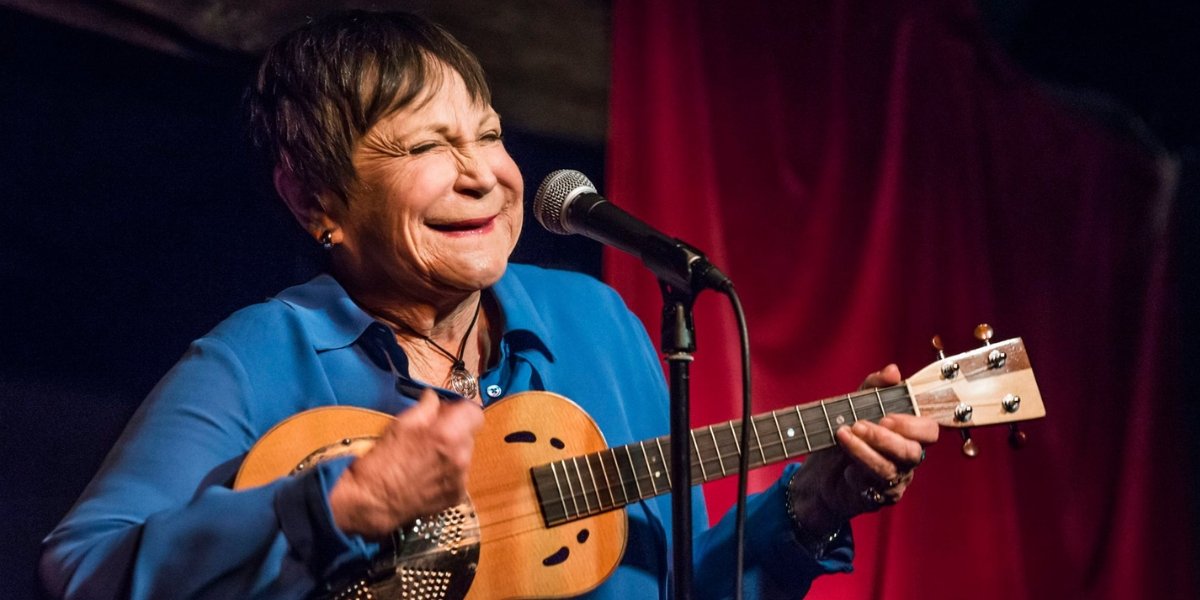
Guinness World Records’ oldest working female comedian, D’yan Forest, is bringing her one-woman show, “D’yan Forest: A Gefilte Fish Out of Water,” to Chicago in partnership with the Chicago Jewish Alliance. The show will take place at the Skokie Theatre on June 18th, with doors opening at 6:30 pm and the performance beginning at 7:00 pm.

A Gefilte Fish Out of Water dives into the trials and tribulations of growing up Jewish. It’s never been easy being Jewish, but after 91 years, D’yan can laugh about it. And so will the audience, as D’yan gives her uncensored take on being a Jew in America, with stories, songs and plenty of jokes. The world may be in a tragic place right now, but D’yan’s most certainly not.

“Talking about being Jewish right now feels more important than ever. There’s a lot of misunderstanding and a lot of people trying to define what Jewish identity means without actually listening to Jews themselves,” explained Forest. “For me, getting on stage and talking about Judaism isn’t just about getting laughs; it’s talking about the struggles, the stereotypes, the awkward conversations, the pride, the resilience, it’s all part of the story. If we can laugh together about what it means to be Jewish today, we can also start to understand each other a little better.”

Forest is a powerhouse comedian who shows no signs of slowing down, having performed around the world in New York, Paris, London, Edinburgh, and even Ethiopia. Critics have described her as “saucy,” “witty,” and “irrepressible.” She has appeared on The Drew Barrymore Show and has been featured in The New York Times, Time Out New York, The New York Post, The Guardian, and France’s Got Talent. Her act titled I Married a Nun has placed her on the same stages as Jerry Seinfeld, Jim Gaffigan, and Joan Rivers.

This June 2026 performance reflects the Chicago Jewish Alliance’s commitment to expanding Jewish cultural programming across Chicago. The Chicago Jewish Alliance is a grassroots, community-powered organization dedicated to defending the Jewish people, standing proudly for the State of Israel, and confronting antisemitism across Chicago and the greater Chicagoland area. Hyperlocal by design and action-driven in approach, CJA supports students, families, synagogues, and institutions through advocacy, security initiatives, and cultural programming. Guided by a commitment to strengthening the next generation of Jews, CJA builds visible, confident Jewish life rooted in dignity, pride, and community leadership. Through partnerships with artists like D’yan Forest and local institutions, it builds vibrant public spaces where Jewish life is celebrated with pride.

“At 90 years old, D’yan Forest reminds us that Jewish life is not only about survival, it is about joy,” said Susan Haggard, President of the Chicago Jewish Alliance. “This performance celebrates humor, vitality, and the spirit that has carried our people through every generation.”

“D’yan Forest: A Gefilte Fish Out of Water” was written by Forest and Stephen Clarke, bestselling author of A Year in the Merde.

The Skokie Theatre is located at 7924 Lincoln Avenue and tickets are priced at $30. You can purchase tickets and learn more by visiting the Skokie Theatre ticketing page.

You can learn more about D’yan Forest by visiting her website at www.dyanforest.com or follow her on Instagram at @dyanforestwriter.

About D’yan Forest:

D’yan Forest was raised a provincial girl in the conservative suburbs of Boston. After a “scandalous” divorce for the time and two years of oral French lessons, Forest got on a five-day boat ride to study abroad in Paris. After falling in love with the city, Forest would then embrace the French culture fully, which would determine the trajectory of the rest of her career.

Back in the US, Forest performed as an international singer at golf clubs, country clubs, bars, and restaurants. Her life as a singer was cut short when the entertainment business in New York City was brought to a halt after the 9/11 attacks. With no idea that she had the capability to be funny, Forest became what the world needed the most at that time: a comedian. With her ukulele in hand, Forest put together a hysterical and risqué one-woman show which caught on quickly.

COVID-19 got Forest to wondering what else she could do with all of her wonderfully hilarious stories from life. I Did it My Ways is the culmination of her sitcom-worthy life events, now available for all to read. But this book is no indication that the 91-year-old is done taking to the stage. Her one-woman acts, “Swinging on the Seine” and “A Gefilte Fish Out of Water” can still be seen in New York and Paris at some of the most famed comedy clubs.

Ghostwriting by Maynard Publishing Explained

Every person carries a story worth sharing. Turning that story into a polished, published book requires skill, structure, and dedication. Ghostwriting by Maynard Publishing offers authors a clear path from raw idea to finished manuscript. The company operates as a full-service publishing partner, helping writers express their authentic voice through professional collaboration.

Understanding the Service Model

Ghostwriting by Maynard Publishing follows a story consultant approach. The team does not simply write on behalf of clients. Instead, writers work directly with each author to understand their vision, voice, and goals. Through open discussion and careful listening, the team refines ideas into high-quality pieces designed to uplift and enlighten readers.

This model puts the author at the center of every project. Whether the book is a memoir, a biography, a work of fiction, or a nonfiction work, the process begins with the author’s perspective. The ghostwriting team then shapes that perspective into a compelling narrative that feels genuine and personal.

Maynard Publishing is a modern, full-service publishing company dedicated to helping authors transform their ideas into impactful, professionally published works. The brand provides comprehensive publishing solutions tailored to each author’s unique vision. From manuscript development and editing to book design and strategic marketing, the company offers a seamless experience at every stage.

A Team With Ideal Industry Backgrounds

The writers behind ghostwriting by Maynard Publishing bring extensive professional experience. The team includes published authors and seasoned journalists who understand how to craft narratives that hold a reader’s attention. Each writer goes through a vetting process before joining the team, ensuring consistent quality across all projects.

This depth of experience allows the team to handle a wide range of genres and formats. They transform initial ideas and extensive research into structured, readable manuscripts. Their skill set covers memoir writing, biographical storytelling, fiction development, and subject-driven nonfiction.

A Flexible Process Built Around Feedback

One feature that defines ghostwriting by Maynard Publishing is the flexible revision process. Authors receive drafts at regular intervals and provide feedback at each stage. The team incorporates those notes into subsequent drafts, ensuring the final product reflects the author’s intent.

This iterative approach removes the pressure many authors feel when working with a ghostwriter. There is no single deadline or rigid structure. Instead, the process adapts to the author’s pace and preferences. Revisions continue until the manuscript meets rigorous publishing standards.

Ghostwriting by Maynard Publishing treats every round of feedback as an opportunity to strengthen the manuscript. This commitment to revision is one reason authors return for additional projects after their first collaboration.

Attention to Detail at Every Stage

Quality control plays a central role in ghostwriting by Maynard Publishing. The team polishes manuscripts through multiple rounds of editing. Grammar, tone, pacing, and narrative structure all receive careful attention before a manuscript moves to the publishing phase.

This level of detail extends beyond the writing itself. The company also supports authors with book design, formatting, and marketing strategy. By handling these elements under one roof, Maynard Publishing reduces the complexity that often overwhelms independent authors.

The brand is especially committed to supporting emerging writers who may find traditional publishing routes complex or restrictive. By combining industry expertise with a personalized approach, the company empowers authors to maintain creative control while benefiting from professional guidance.

Preserving the Author’s Unique Voice

A common concern among authors considering a ghostwriter is the fear of losing their voice. Ghostwriting by Maynard Publishing addresses this directly. The team prioritizes preserving each author’s unique perspective throughout the writing process.

Every project starts with in-depth conversations about the author’s tone, values, and communication style. Writers reference these conversations throughout the drafting process. The result is a manuscript that sounds like the author wrote it, because the author’s input shapes every chapter.

This collaborative philosophy separates the service from providers that rely on templated or formulaic content. Each project receives individual attention, and no two manuscripts follow the same blueprint.

A Long-Term Collaborative Approach

Many authors view their first book as the beginning of a longer publishing journey. Ghostwriting by Maynard Publishing supports that vision through a long-term collaborative model. The team builds lasting relationships with clients, offering continued guidance as authors develop new projects.

This approach benefits authors who plan to write multiple books or expand into different genres. Having a familiar team that already understands an author’s voice and goals saves time and improves consistency across titles.

The company’s mission is to make publishing straightforward, transparent, and rewarding. It enables authors to share their stories with a global audience and build a lasting literary presence.

How to Start a Project

Authors interested in ghostwriting by Maynard Publishing can begin with a consultation. The team discusses the scope of the project, timelines, and expectations before any writing begins. This initial conversation helps both parties determine if the collaboration is a strong fit.

From there, the process moves into research, outlining, and drafting. Authors stay involved at every milestone, reviewing progress and providing direction. The goal is a finished manuscript that meets professional publishing standards and resonates deeply with readers.

To learn more or schedule a consultation, visit the Maynard Publishing contact page.