The Chicago Journal

South Shore Line Launches Monon Corridor Service on March 31, Tornado Warning and All


The South Shore Line’s Monon Corridor opened for passenger service on Tuesday, March 31, 2026 — completing a nearly $1 billion transit expansion that connects northwest Indiana communities to downtown Chicago for the first time by commuter rail. The launch came with an unplanned twist: a tornado warning forced the evacuation of the ribbon-cutting ceremony before the inaugural run could formally begin, turning what was meant to be a ceremonial first trip into the first revenue run of a new era in regional transit.

A Tornado Delays History, But Does Not Stop It

The inaugural run on the 8-mile line from Hammond Gateway Station to Munster/Dyer was delayed when participants in the opening ribbon-cutting ceremony were evacuated because of a tornado warning — pushing back the planned trip for invited guests to the point that it also became the first revenue run. The disruption came on the heels of a National Weather Service Severe Thunderstorm Warning at 10:07 a.m. CT, calling for people to shelter in place or take other measures.

The resulting delay to the planned 10 a.m. ribbon cutting and initial trip for Northern Indiana Commuter Transportation District, state, and local officials to Munster/Dyer and back led to combining that trip with the initial revenue run, which had been set for 11:45 a.m.

Despite the weather disruption, service launched as planned midday. The first train running on the Monon Corridor departed Hammond Gateway toward Munster/Dyer Station at 11:45 a.m. CDT. The first northbound train was a shuttle, Train 1024, departing Munster/Dyer at 12:35 p.m. CDT.

The moment marked the culmination of years of planning, political negotiation, engineering, and construction — a project that broke ground in October 2020 and crossed the finish line five and a half years later, on a stormy Tuesday morning in northwest Indiana.

What the Monon Corridor Is and What It Connects

The South Shore Line is pleased to announce the completion of the West Lake Corridor project line extension and the long-awaited opening of train service on the Monon Corridor. The Monon Corridor is the South Shore Line’s first branch line. Hereafter, the train service will be referred to as two corridors — the Lakeshore Corridor, running from South Bend to Chicago, and the Monon Corridor, running from Munster/Dyer to Chicago.

New stations on the Monon Corridor include Hammond Gateway, South Hammond (173rd St), Munster Ridge, and Munster/Dyer. Passengers will not need a separate ticket to travel between the Lakeshore Corridor and the Monon Corridor.

The Monon Corridor is an 8-mile southern extension of the main Lakeshore Corridor. For residents of Munster, Dyer, and surrounding Lake County communities in Indiana, the opening provides a direct rail link to Millennium Station in downtown Chicago — a connection previously unavailable by commuter rail. The line threads through communities that have long relied on highway access into the city, and its opening introduces a new commuting option for a growing suburban corridor.

The Name: A Tribute to Railroad History

The new branch has been named the Monon Corridor in honor of the historic Monon Railroad, whose former right-of-way is used for the line.

The Monon Railroad — formally known as the Chicago, Indianapolis & Louisville Railway — operated in Indiana from 1897 to 1971, when it was merged into Louisville and Nashville Railroad. The line served Indiana communities across decades of industrial and agricultural expansion, and its legacy remained embedded in the landscape long after regular service ended. The Monon Corridor is so named as a tip of the hat to the Chicago, Indianapolis & Louisville Railway, also known as the “Monon,” a classic twentieth century railroad that served Indiana from 1897 to 1971.

By building on the Monon’s former right-of-way, the Northern Indiana Commuter Transportation District preserved a piece of regional rail heritage while converting it into a functioning piece of 21st-century transit infrastructure.

Service Structure: Direct Trains and Shuttle Connections

During weekday morning rush hour periods, five Monon Corridor trains will serve Munster/Dyer Station, Munster Ridge Station, and South Hammond Station, then travel into Illinois serving Hegewisch through Millennium Station. One morning rush will return from Chicago, serving the same stations.

During weekday afternoon rush hour periods, five Monon Corridor trains will return from Chicago, and one will go into Chicago, serving the same stations as the morning rush.

The new line will offer six daily round trips direct to and from downtown Chicago, along with off-peak shuttle service between Munster/Dyer and Hammond, where passengers can transfer to trains on the Chicago–South Bend Lakeshore Corridor.

For off-peak and weekend riders, shuttle trains operate between Hammond Gateway and Munster/Dyer, with transfers available at Hammond Gateway for continued service into Chicago. Some Monon Corridor trains travel directly to Chicago. Other trains, called Shuttles, require a simple transfer at Hammond Gateway Station to continue the trip. The transfer process is designed to be straightforward, with guidance provided at the station.

Passengers who hold existing multi-ride tickets purchased for Lakeshore Corridor stations are permitted to use those same tickets at Monon Corridor stations through the end of April 2026, easing the transition for regular commuters adjusting to the new schedule.

A $1 Billion Investment in Regional Connectivity

Today’s events mark the completion of a nearly $1 billion project that saw groundbreaking in October 2020. The project — formally known as the West Lake Corridor project — was one of the largest public transit investments in northwest Indiana’s history. Funding for the project drew from federal, state, and local sources, including a Federal Transit Administration Capital Investment Grant that helped underwrite the construction of new track, stations, and supporting infrastructure along the corridor.

The project’s completion arrives amid a broader national conversation about the value of regional transit investment. In Chicago, the CTA Red Line Extension to the South Side is currently under construction — having recently survived a federal funding freeze — while the broader RTA network continues to navigate a $200 million budget shortfall. The Monon Corridor’s opening offers a counterpoint to those struggles: a project that absorbed years of delay, financing challenges, and now a tornado warning, and still crossed the finish line.

What It Means for Chicago’s Regional Network

The opening of the Monon Corridor expands the South Shore Line’s reach and, by extension, deepens Chicago’s role as the anchor of a broader regional transit system spanning two states. Riders in Munster and Dyer — towns in Lake County, Indiana, with combined populations approaching 50,000 — now have rail access to Loop-area employment, O’Hare-area connections, and the full intermodal network centered on Millennium Station.

For Chicago, the addition of new rail-linked communities to the west represents a long-term investment in the region’s commuter infrastructure. Transit agencies and regional planners have consistently cited access to Chicago employment as a driver of economic health in the suburban ring, and the Monon Corridor extends that access further into communities that had previously been transit-underserved.

Outgoing South Shore Line President Michael Noland said: “We are thrilled to open the long-awaited West Lake Corridor to the public. This new branch has been named the Monon Corridor in honor of the historic Monon Railroad, whose former right-of-way is used for the line. The Monon Corridor provides additional convenient service options to rapidly growing areas of Lake County, Indiana, and surrounding communities. The South Shore Line team stands eager and ready to serve passengers.”

The tornado warning that briefly upended the morning’s ceremony will likely become a footnote in the corridor’s story — the kind of opening-day detail that riders recall years later. What will remain is the service itself: a restored connection between Chicago and northwest Indiana, built on the right-of-way of a railroad that carried Indiana for the better part of a century, now carrying it forward again.

Boards, Standards, and the Ecosystem: Kurt A. Dasse’s Governance Roles

In medical technology, boardrooms often set the pace long before a device reaches an operating theatre. Directors and advisors influence how companies handle clinical evidence, quality systems, supply constraints, and market access requirements that can determine whether a product advances or stalls. Governance also shapes how organizations respond when trials raise questions, when regulators ask for additional data, or when reimbursement criteria shift. In that environment, board service becomes a working layer of the device ecosystem, tying engineering decisions to risk, compliance, and adoption.

Board service in the medical device sector tends to sit at the intersection of technical direction and institutional accountability. Directors are expected to review development plans and ensure that decision-making stays aligned with safety, quality, and commercial constraints. In practice, that means pressure-testing assumptions around intended use, defining what “enough” evidence looks like for clinical claims, and ensuring the organization can demonstrate design controls and post-market obligations.

For executives with experience across research, commercialization, and clinical programs, board roles often center on two recurring tensions. The first involves the pace of iteration versus the stability required for regulated manufacturing. The second involves timing: what must be proven before a pivotal study, what can be learned in staged rollouts, and what must be documented to satisfy regulators, hospital procurement teams, and payers.

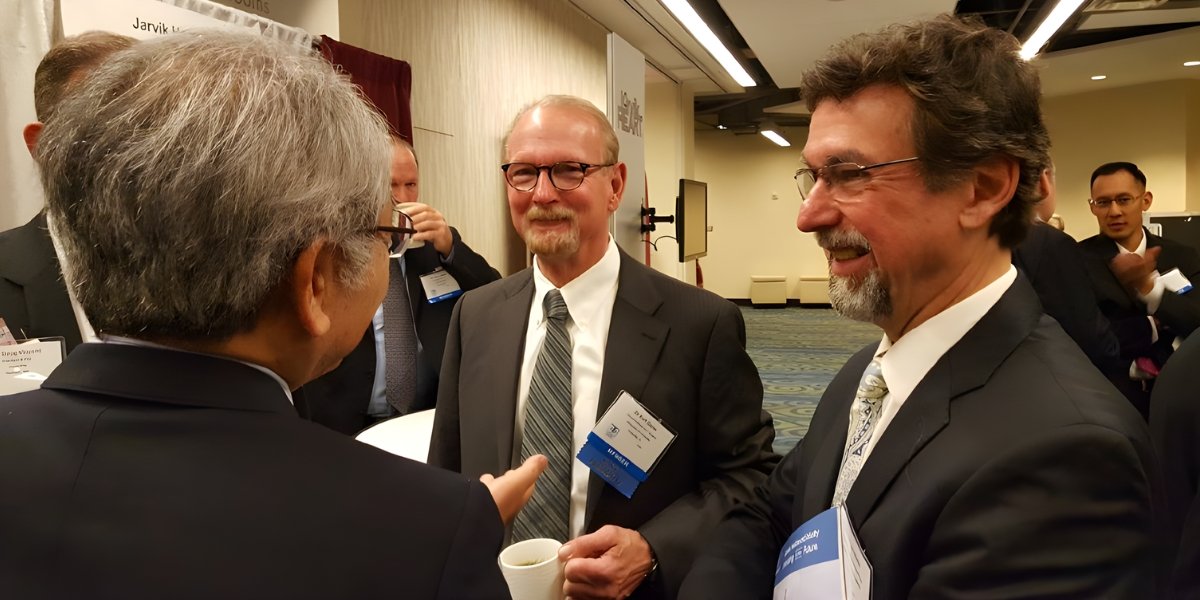
Kurt A. Dasse, Ph.D., has been associated with that governance layer through board seats and advisory roles across multiple device and biotech organizations. Public records and company announcements tie him to leadership and oversight roles in mechanical circulatory support, including work with Levitronix and GeNO, as well as board appointments at Makana Therapeutics. 

Dasse’s board service has included companies and programs operating in cardiovascular devices, circulatory support, and adjacent specialties. In various biographies and career summaries, he is listed as serving on boards including Given Imaging, Afferent, Levitronix, Endovalve, GeNO, Flow Forward, Artio, Makana, VADovations, and Inspired Therapeutics. A specific example of a board-level appointment appears in a 2021 announcement from Makana Therapeutics, which named him to its board. 

Board responsibilities in this segment typically revolve around three repeating agenda categories.

Device companies that operate in high-risk indications maintain structured risk-management systems that are often updated as clinical or manufacturing realities change. Board-level oversight commonly reviews hazard analyses, mitigations, complaint signals, and the operational plans needed to keep development milestones intact while meeting quality-system requirements.

Directors are frequently asked to interrogate endpoints, enrollment feasibility, and the adequacy of follow-up. A board may push for stronger evidence packages not only for regulators but also for hospital committees that evaluate adoption, especially in surgical, ICU, and pediatric contexts, where protocols, training, and long-term follow-up can influence demand.

Even when a device is technically functional, reimbursement policy can decide its scale. Boards review commercial assumptions, coding pathways, clinical utility narratives, and pricing strategies that are expected to match the realities of payer review and hospital budgeting.

Dasse’s professional timeline intersects with corporate transactions that illustrate why governance matters in this field. In 2011, Thoratec announced the acquisition of Levitronix’s medical business for $110 million in cash, plus potential milestone payments of up to $40 million, as reported by Reuters and reflected in the company’s press release. Those terms signal the kind of transition risk boards typically manage: continuity of design history files, post-acquisition manufacturing oversight, complaint-handling continuity, and product stewardship when assets move between organizations.

Similarly, GeNO announced in 2013 that Dasse, then serving as president and a member of the company’s board of managers, had been appointed chief executive officer. CEO appointments in regulated product environments often entail a governance dimension beyond standard corporate leadership, as the chief executive is tied to quality culture, clinical strategy, and a regulator-facing posture.

Beyond formal directorships, Dasse’s service has included advisory roles that operate as technical and governance extensions of the board. These roles often sit on technology advisory boards (TABs) and scientific advisory boards (SABs), as well as consortia focused on specific clinical gaps or regulatory pathways.

A governance challenge in pediatric and high-acuity device work is balancing the pace of innovation with safety requirements in small patient populations. In a published interview, Dasse discussed the structure of device commercialization and described barriers that can slow pediatric device programs, including funding and adoption constraints. While advisory bodies do not carry the fiduciary responsibilities of directors, they frequently influence design choices, protocol decisions, and the framing of clinical questions.

Advisory groups also function as “translation checkpoints.” They can help organizations decide whether a technical improvement changes a product’s risk profile enough to trigger revalidation, new clinical-evidence expectations, or an updated regulatory strategy. In areas such as mechanical circulatory support, small changes in materials, pump design, software controls, or alarms can shift the scope of validation. Advisory bodies often force early clarity on what must be locked down to prevent avoidable rework.

Device governance ultimately intersects with standards and policy because regulator expectations, consensus standards, and the evolving demands of clinical practice shape the lifecycle of a medical device. Directors and senior advisors frequently deal with the practical consequences of these frameworks: audit readiness, corrective and preventive action systems, and the discipline of documenting design changes in ways that remain defensible years later.

In Dasse’s case, public materials describing his work emphasize the long arc of bringing complex systems to market and the pressures that arise during development and scale-up. That arc typically includes recurring interactions with FDA-facing processes and ISO-aligned quality expectations, even when the details vary across product categories and intended uses. Governance shapes those interactions by deciding how aggressively a company sequences evidence, how it budgets for compliance infrastructure, and how it responds when timelines slip.

Seen from a distance, board service can look ceremonial. In the device sector, it rarely is. It is a mechanism for deciding what to prioritize, which risks to accept or reject, and how a company frames its technology in the language of regulators, clinicians, and payers. Dasse’s governance roles, spanning boards and advisory bodies related to cardiovascular and cardiopulmonary technologies, place him in the decision-making layer where standards and policy translate into concrete product pathways. 

Philippe Boulanger and the Convergence of Startup Mentorship and Corporate Innovation Advisory in a Global Context

The relationship between startups and large corporations has changed considerably over the years. Currently, they tend to be far apart, watching each other. Large corporations partner with startups because the latter can easily test their ideas. Startups also appreciate the relationship with large corporations because they can learn from them as they operate on a global level. According to the OECD, small and medium-scale businesses make up more than 90 percent of all businesses globally and are significant job creators. Large corporations continue to invest heavily in research and development, while startups and small businesses are essential in job creation and innovation. Startups are best at innovation and are extremely flexible.

It is within this broader landscape that Philippe Boulanger has positioned part of his professional activity. After a career that included executive roles in multinational technology companies, Boulanger expanded his focus toward advisory work with early-stage ventures and innovation programs. Rather than concentrating solely on keynote speaking or corporate leadership, he began working directly with founders and management teams seeking to build scalable business models in rapidly evolving markets.

Boulanger is a partner and mentor at Senseii Ventures, a seed-stage venture capital fund. In this capacity, he is engaged in the evaluation of early-stage companies and provides strategic guidance to selected founders. Seed-stage investment is viewed as a critical milestone in the evolution of a startup, often the difference between an idea that is more than a prototype and one that is not. As part of Senseii Ventures, Boulanger is engaged in discussions related to product strategy, market fit, and organizational design, drawing on experience gained in larger corporations.

His role in the venture capital industry is not limited to the structure of the venture capital firm. Boulanger has also been involved in the assessment and mentorship of startups through initiatives such as Wilco, a European startup platform aimed at linking young tech companies with corporate partners and investors. Such initiatives involve the screening of hundreds of applicants on an annual basis, selecting a smaller group of applicants for acceleration. In this case, Boulanger is involved in the assessment of technological feasibility, team dynamics, and the ability of founders to deliver under competitive pressure.

This startup engagement is a reflection of his continued entrepreneurial experience. Before taking up executive roles in global companies, Boulanger was involved in founding companies that the Sagem Group eventually acquired. This experience, which involved a transition from entrepreneurship to directing a business unit, has provided him with insight into both the freedom of entrepreneurship and the executional requirements of a large organization. In his consulting role, he has often dealt with the challenge of experimentation and governance, a challenge that has been identified in innovation management studies.

One of the key issues that Boulanger deals with in his consulting role is the issue of innovation bottlenecks in organizations. In large companies, innovation bottlenecks could be the result of long approval processes, poor communication, or risk aversion among middle management. In startups, innovation bottlenecks could be the result of poor vision, a lack of structure, or the inability to develop prototypes into marketable products. Through his engagement with both organizations and startups, Boulanger uses similar tools for diagnosis but scales them according to the organization type.

In the context of corporate consulting, Boulanger’s focus is on building resilience in markets that are subject to rapid technological acceleration. Rapid advances in artificial intelligence, automation, and digital platforms have compressed product life cycles across industries. As a result, consulting projects often involve the development of systematic processes for experimentation and learning. Rather than focusing on innovation projects that are isolated from the rest of the business, companies are encouraged to develop repeatable processes for testing hypotheses and scaling successful ideas.

The translation of executive experience into actionable guidance is a recurring element of Boulanger’s consulting profile. As someone who has previously led large research and development teams in a multinational corporation, he is able to draw parallels between more traditional hierarchical models and the flatter models that are more common in startups. This allows him to advise corporate executives on how to maintain accountability while encouraging innovation, and advise startups on how to prepare for growth without losing momentum.

Boulanger’s consulting work also extends into the realm of educational institutions and executive programs, where he is involved in discussions about innovation management and transformation. While not a full-time academic, he has been involved in various mentoring and teaching capacities for business leaders and entrepreneurs. These activities serve to complement his consulting work by extending its influence from the level of the company to that of the profession as a whole.

In all of these activities, the focus remains on process rather than personality. The consulting model he advocates for seeks to replace unstructured innovation initiatives with quantifiable approaches, whether in a startup getting ready for its first round of funding or a corporation looking to revamp its legacy systems. In this respect, his consulting activities reflect a larger trend in management theory towards evidence-based innovation and constant adaptation.

The consulting activities of Philippe Boulanger reflect a history of transition from entrepreneur to multinational executive and finally to startup mentor and advisor, representing an attempt to integrate the different parts of the global technology community. Through his involvement with venture capital efforts such as Senseii Ventures, evaluation frameworks such as Wilco, and corporate clients in the midst of structural change, he is part of a larger community that extends from early-stage experimentation to established enterprise. The combination of these experiences has created a consulting profile that emphasizes resilience, systematic innovation, and the ability to turn strategic insight into practical action.