The Chicago Journal

Financial Sustainability for Non-Profits: Key Strategies for Long-Term Success


Introduction

Financial sustainability is one of the biggest challenges non-profit organizations face. Without the luxury of consistent revenue from products or services, non-profits must rely on donations, grants, and other funding streams, making long-term financial planning more complex and challenging. In Empowering Non-Profit Success: Strategies for Effective Management and Cause-Driven Marketing, Dr. Sarah Sun Liew outlines strategies that can support non-profits in achieving their financial sustainability and continuing to fulfill their mission. This article explores the key approaches that non-profits may use to build financial stability and long-term success.

Financial Sustainability for Non-Profits: Key Strategies for Long-Term Success

Photo Courtesy: Dr. Sarah Sun Liew

1. Diversifying Revenue Streams

One of the most effective strategies for improving financial sustainability is diversifying revenue streams. Non-profits that rely solely on one type of funding, such as individual donations or government grants, could face financial instability if that source becomes unavailable. Dr. Liew emphasizes the importance of having multiple income sources, including:

  • Individual Donations: Regular contributions from individual donors form the backbone of many non-profits’ revenue. Establishing a strong donor cultivation strategy, including recurring giving programs, can help create a stable income stream.
  • Grants: While competitive, grants from foundations, corporations, and government agencies can provide significant funding for specific projects or programs.
  • Corporate Sponsorships and Partnerships: Collaborating with corporations through sponsorships, cause-marketing campaigns, or CSR initiatives can generate additional funding and resources for non-profits.
  • Earned Income: Some non-profits create revenue through social enterprises or fee-for-service models, such as selling products or offering services that align with their mission.
  • Fundraising Events: Hosting events like galas, auctions, or walk-a-thons may attract significant funding, although they also require upfront investment and meticulous planning.

Diversifying these revenue streams helps ensure that non-profits are not overly reliant on a single funding source and can provide stability during economic downturns or shifts in donor priorities.

2. Building a Strong Donor Base

Dr. Liew highlights that cultivating and retaining donors is essential for financial sustainability. Non-profits should view their donors as long-term partners and not just one-time contributors. To build a strong donor base, non-profits need to engage in regular communication, transparency, and appreciation.

  • Regular Updates: Keeping donors informed about how their contributions are making a difference helps maintain engagement and reinforces the value of their support. Newsletters, impact reports, and personalized updates are effective ways to stay connected.
  • Donor Recognition: Recognizing donors’ contributions through personalized thank-you letters, public recognition, or exclusive events can help foster loyalty and encourage repeat donations.
  • Recurring Giving Programs: Offering an easy way for donors to sign up for monthly giving provides a predictable and steady revenue stream. Recurring donors tend to be more engaged and committed to the non-profit’s cause.

The more a non-profit invests in building relationships with its donors, the more likely it is to secure sustained financial support.

Financial Sustainability for Non-Profits: Key Strategies for Long-Term Success

Photo Courtesy: Dr. Sarah Sun Liew

3. Strategic Financial Planning and Reserves

Sound financial management is crucial for non-profits aiming for long-term sustainability. Dr. Liew advises non-profit leaders to engage in strategic financial planning, which includes creating a budget that accounts for both current needs and future growth.

  • Budgeting for Stability and Growth: Non-profits should budget not only for operational expenses but also for expansion and unforeseen challenges. A well-thought-out budget aligns with the organization’s strategic plan and can help ensure that resources are allocated effectively.
  • Building a Reserve Fund: Non-profits should aim to build a financial reserve or “rainy day” fund to cover unexpected expenses or shortfalls in revenue. A reserve fund acts as a buffer during periods of economic uncertainty, helping the organization continue its operations without disruption.

Dr. Liew underscores that financial planning should not be reactive. Proactively preparing for different scenarios helps non-profits remain resilient and maintain stability even in times of crisis.

4. Grant Writing and Effective Fundraising Campaigns

Successful grant writing and fundraising campaigns are crucial for securing financial resources. Dr. Liew emphasizes that non-profits should focus on writing compelling grant proposals that clearly demonstrate the organization’s impact and how the funding will be used to further its mission.

  • Grant Writing Tips: When applying for grants, non-profits must ensure that their proposal is well-researched and aligned with the funder’s priorities. Strong proposals include detailed plans for how the funding will be used, specific outcomes, and a clear connection between the non-profit’s mission and the grant’s objectives. Effective fundraising campaigns, on the other hand, should appeal to the emotions and motivations of donors. Whether it’s a year-end appeal or a special project fundraiser, campaigns should be:
  • Mission-Centered: Fundraising efforts should always relate back to the non-profit’s mission, making it clear how contributions directly support the cause.
  • Story-Driven: Dr. Liew notes the power of storytelling in fundraising campaigns. Stories of beneficiaries whose lives have been transformed by the organization’s work resonate more deeply with donors than statistics alone.

By mastering the art of grant writing and executing compelling fundraising campaigns, non-profits can improve their chances of securing significant financial resources to sustain their operations.

5. Monitoring and Reducing Overhead Costs

While overhead expenses are necessary for the functioning of any organization, non-profits must be vigilant about managing these costs to ensure that the majority of their resources go directly toward their programs. Dr. Liew advises non-profits to regularly evaluate their expenses and find ways to reduce overhead without compromising their effectiveness.

  • Cost-Saving Measures: These might include negotiating better deals with suppliers, adopting technology to streamline administrative tasks, or leveraging volunteer expertise for certain services.
  • Transparent Financial Reporting: Non-profits that demonstrate transparency in their financial reporting tend to build trust with donors and funders. Clearly showing how funds are allocated can increase confidence that their contributions are being used responsibly.

A non-profit that effectively manages its overhead expenses can maximize the impact of its financial resources, making it more attractive to potential donors and funders.

6. Long-Term Strategic Partnerships

Developing long-term partnerships with corporations, foundations, and government agencies may provide non-profits with ongoing financial support and resources. Dr. Liew suggests that non-profits should actively pursue partnerships that align with their mission and values.

  • Corporate Partnerships: Companies often seek to partner with non-profits that align with their corporate social responsibility (CSR) goals. These partnerships may take many forms, such as financial sponsorship, employee volunteering, or cause-marketing campaigns.
  • Foundation Grants: Building relationships with foundations that share the non-profit’s values can result in multi-year grants, providing stability and reducing the need for constant fundraising.
  • Government Contracts: In some cases, non-profits can secure contracts to provide services on behalf of the government. These contracts, while competitive, can offer a reliable source of funding for specific programs.

Partnerships offer more than just financial support—they often come with resources like expertise, volunteers, and access to new networks, all of which may contribute to the non-profit’s sustainability.

Summary

Financial sustainability is essential for non-profits that want to continue making an impact over the long term. As Dr. Sarah Sun Liew outlines in Empowering Non-Profit Success, non-profits may achieve this by diversifying their revenue streams, cultivating strong donor relationships, engaging in strategic financial planning, and building long-term partnerships. By adopting these strategies, non-profits will be better positioned to navigate financial challenges, sustain their operations, and continue their mission of creating positive change in the world.

Media Features

Author Profile: Dr. Sarah Sun Liew – Wikitia

Direct Contact: (424) 343-7025 / info@meridianwish.com


Disclaimer: The information provided in this article is for general informational purposes only and should not be construed as financial advice. Non-profit organizations are encouraged to consult with a financial professional before making any significant financial decisions or implementing any of the strategies discussed. Results may vary depending on individual circumstances, and no guarantees of success or financial outcomes are made.
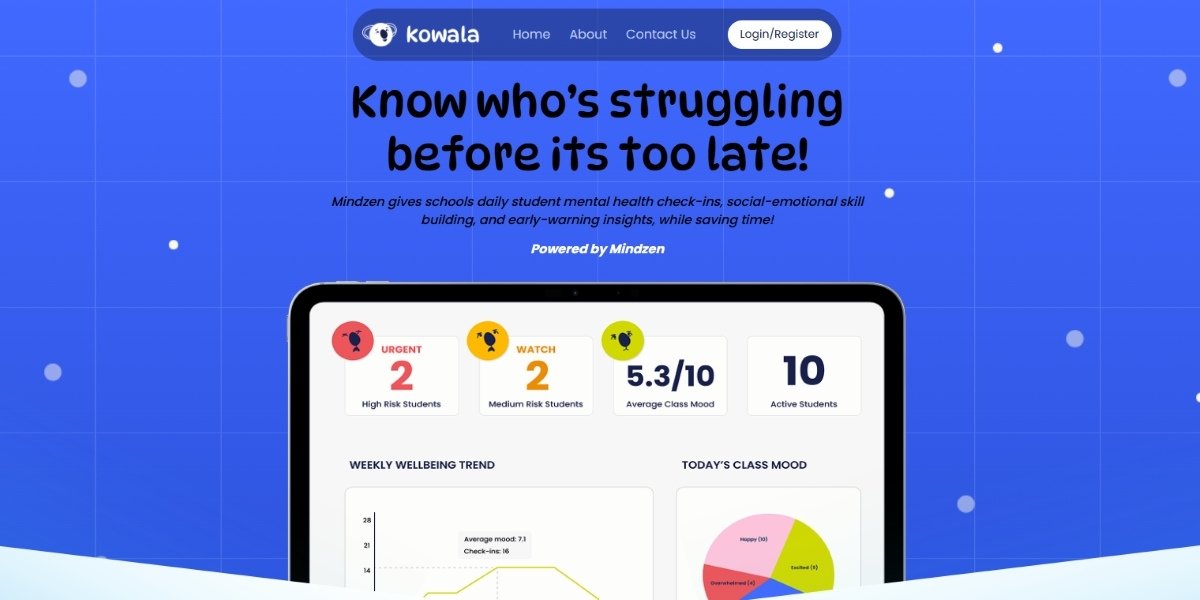
Understanding Student Emotions Before It’s Too Late: How Kowala Helps

Today, emotional well-being is becoming as important as academic success in almost every school. Students come from different backgrounds and have different problems. Every day, they carry stress, anxiety, family problems, societal pressure, and academic difficulties to school. Yet, it becomes really hard for counselors, teachers, and school administrators to catch who is truly struggling until the issue becomes apparent. 

Most schools do not lack care. Instead, they lack time and simple yet effective tools to help them identify their students’ emotional problems before it’s too late. 

That is where Kowala, powered by Mindzen, makes a real difference. It’s not about replacing teachers or counselors. It is about offering schools a better way to listen and support their students. 

Introducing Kowala – A Simple Tool for Students to be Heard  

Kowala is a child-friendly application that helps schools understand the emotions of their students in a safe and practical way. It allows students to express their everyday feelings and helps educators get a clear insight. This way, counselors, teachers, and parents can support the right child at the right time. 

Students can share their feelings through: 

  • Visual mood check-ins using colors and characters
  • A mood jar activity that helps them recognize and name their feelings
  • Short reflections and interactive stories
  • Gentle, age-appropriate questions such as “What made you feel this way today?”

Kowala feels more like a supportive activity than a survey for children. For schools, it is a powerful way to understand emotional well-being across classrooms.  

Clear Emotional insight Without Extra Work

While Kowala gives students a playful and supportive experience, educators get something different behind the scenes. They easily get clear emotional insights without doing extra work.

Kowala offers staff an easy-to-read overview of the emotional state of the class. Teachers and school administrators do not need to go through complex charts or lengthy reports. The platform offers simple visuals and clear language so staff can understand what is happening at the blink of an eye.   

Schools can benefit by: 

  • Seeing the overall class mood quickly
  • Understand emotional trends over time
  • Recognize changes that require attention

Most importantly, the tool does this without adding any extra burden to teachers. The system runs during advisory or homerun time and does not require new lesson planning. 

Supporting Counselors, Social Workers, and School Leaders

Kowala is especially designed for people who carry the responsibility of student well-being. It moves the guesswork to clarity. When emotional patterns appear, staff can see which students may benefit from support before the issues increase. 

The tool helps the staff: 

  • Review emotional trends and patterns
  • Identify students who may need support
  • Take actions, such as scheduling sessions or contacting families

With a clear picture of the school’s well-being, school leaders can make strong safeguarding decisions and an integrated approach to emotional care. This also helps parents through early and meaningful communication when support is needed.

Why Early Emotional Support Matters

Emotional difficulties are often small and hard to spot initially. A child may feel worried about school, friendships, or home life. They might seem smaller at the beginning, but they can slowly grow into bigger challenges when left unprocessed. These challenges may cause behavioral issues, declining academic performance, and disengagement. 

Early emotional awareness with Kowala allows schools to: 

  • Identify students who may require immediate support
  • Create a safer and supportive school environment
  • Build trust between students and adults
  • Manage small problems before they turn into long-term issues

However, early support can only be offered when schools know what is actually happening and what can be done to prevent further damage. 

Challenge Schools Face Today With the Emotional Well-being of Their Students

In most classrooms, emotional problems are not always obvious. A student may become quieter. Another may lose focus. Others may show frustration, and some may withdraw completely. 

When the size of a class is large and the school has limited counseling staff, it becomes almost impossible to assess each student deeply every day. One counselor is assigned to look after the emotional well-being of hundreds of students, and teachers already struggle with heavy workloads. Consequently, even the most obvious warning signs are easily missed. 

Therefore, students get referred for counseling when their issues become unmanageable, although their condition could have easily been prevented with proper check-ins.

What Makes Kowala Stand Out

Child-Friendly Design

Kowala is specifically built for children to express their feelings openly. The platform feels engaging with friendly characters, cheerful colors, and visual activities. It doesn’t make the experience scary with clinical language or boring surveys. This friendly layout helps students feel safe and participate honestly. 

Data and Emotional Growth Combined

Kowala is not only used to collect data about students’ emotional well-being. It also helps students learn about their emotions and manage distress efficiently. The platform benefits them by helping them recognize their feelings, develop empathy, and reflect on emotions through interactive prompts, stories, and activities.    

Immediate Emotional Information

Emotional needs aren’t constant and can change quickly. Kowala offers teachers and counselors up-to-date information on emotional well-being and trends. Staff don’t need to wait for weeks to get the report; they can instantly check what is happening at any time. This updated information helps schools offer timely interventions.  

No Extra Work for Teachers

Kowala is designed with the understanding that teachers are always under time pressure. Therefore, teachers do not have to develop new strategies or manage complex systems; the platform instantly delivers clear and simple insights.  

An Optimistic Future for Students’ Well-being

In today’s world, schools are under high pressure to support the emotional well-being of their students. However, they have limited resources to stay updated about their emotional state and make personalized plans. 

Kowala, powered by MindZen, helps schools offer proactive support to their students. It detects even the smallest emotional signs into meaningful insights and assists schools in developing and implementing effective strategies. 

When students feel heard, they are likely to express themselves more openly, leading to adults gaining strong insights into their mental well-being and offer right support. Consequently, schools become a healthy place to learn. 

If you are planning to take proactive care of your students’ mental well-being, Kowala is here to provide a simple and supportive way to begin. Find Kowala on Instagram: @Kowalaapp


Disclaimer: While Kowala aims to support schools in identifying and addressing students’ emotional well-being, individual results may vary. The article does not constitute professional medical advice, diagnosis, or treatment. Schools and educators should seek guidance from qualified professionals for specific concerns regarding student emotional health. Kowala is a tool designed to assist, not replace, existing school support systems.

Altai Oncology: Empowering Oncologists with Cutting-Edge Software Solutions

Oncology has entered a period of profound technological change. As treatments grow increasingly complex, oncologists must make rapid, high-stakes decisions while also managing demanding administrative tasks, safety checks, and long-term documentation. Digital platforms have become indispensable in navigating these pressures, offering a way to streamline workflows, reduce manual errors, and support evidence-based care. Within this global shift toward digitally enabled cancer treatment, Altai Oncology stands out as a company that has built a comprehensive, oncology-specific ecosystem designed for the realities of modern cancer care.

Altai Inc., operating under the Altai Oncology brand, was founded in 2013 by Ulas Darda Bayraktar. The company’s headquarters are in Sheridan, Wyoming, while its research and development operations are based in Ankara, Turkey. This dual structure allows Altai to maintain both regulatory compliance and high-velocity development cycles. The company holds ISO 13485 certification, reflecting its commitment to medical-device quality management standards, and its flagship system, the Altai Oncology Suite, is marked with CE marking as a Class IIb medical device. These credentials position Altai as a trusted provider of oncology informatics for hospitals, cancer institutes, and infusion centers.

The Altai Oncology Suite functions as a unified digital environment that manages the entire chemotherapy lifecycle—from initial treatment planning to pharmacy preparation and infusion administration. The software integrates chemotherapy order entry, dose calculation, protocol selection, documentation, scheduling, drug inventory management, and cancer registry functions into a single cohesive system. Clinicians can choose standardized protocols, adjust regimens based on patient-specific parameters, and generate complete treatment plans without needing disconnected tools or manual calculations. Dose computations are performed automatically using validated formulas and current laboratory values, which help to improve precision and reduce the likelihood of calculation errors. Safety features such as drug-interaction warnings, allergy checks, dual-dose verification, and cumulative-dose limits offer additional safeguards throughout the process.

A defining strength of the system is its extensive protocol library, which has been continually curated since 2015 and now includes more than 1,000 oncology and hematology treatment protocols. These protocols cover chemotherapy, immunotherapy, targeted therapies, supportive-care pathways, and transplantation regimens. Each entry provides detailed clinical guidance, including dosing, administration steps, monitoring requirements, and laboratory criteria. The library is regularly updated to incorporate new research findings, regulatory approvals, and guideline revisions, aiming that oncologists have access to current standards of care. Institutions may also create their own custom protocols within the system, allowing them to integrate institutional pathways, clinical-trial regimens, or locally adapted treatment strategies.

In recognition of the increasing role of mobile technology in healthcare, Altai has extended its ecosystem to include the Altai Oncology Mobile App for iOS and Android. The app gives clinicians access to the full protocol library, dosing calculators, staging modules, and summary references directly from their phones or tablets. This mobile capability supports clinicians during rounds, consultations, and off-site decision-making, offering a seamless complement to the main desktop system. The synchronization between mobile and desktop environments helps treatment information remain consistent across platforms and aligns with data protection requirements.

Altai Oncology also developed its OncoRegistry module to support structured documentation of toxicities, staging details, treatment responses, and long-term outcomes. This registry function helps institutions monitor results over time, conduct internal quality reviews, and generate reliable datasets for research or clinical trials. By standardizing how treatment data is captured, the system enhances continuity of care and supports the shift toward data-driven oncology.

A notable advantage of the Altai Oncology Suite is its high degree of customizability. Oncology practices vary widely in their workflows, resources, staffing, and regulatory environments, and the software can be configured to match these differences with minimal disruption. Scheduling views can be adapted to reflect infusion-chair availability, acuity levels, and staffing assignments. Documentation templates, pharmacy workflows, and clinical pathways can be modified to align with institutional practices. This flexibility allows cancer centers—whether small private clinics or large hospital-based programs—to integrate the software into their existing operations.

Successful implementation of complex clinical software depends not only on features but also on user support and training. Altai Oncology provides structured onboarding for its systems, including Chemo Planner, the Oncology Suite, and OncoRegistry. Training can be delivered remotely or on-site and focuses on protocol management, dose-calculation tools, documentation workflows, and customization options. Ongoing support includes routine updates to the protocol library, system maintenance, user-specific troubleshooting, and assistance from Altai’s U.S. and Turkish operations, helping the company support clients across multiple time zones.

As oncology care becomes increasingly dependent on data accuracy, safety mechanisms, and standardized protocols, solutions like Altai Oncology’s are becoming essential components of clinical infrastructure. The company’s combination of protocol standardization, integrated decision-support tools, customizable workflows, registry functionality, and mobile accessibility reflects a broader trend toward specialized digital ecosystems in cancer care. With its continued investment in research, software development, and clinical collaboration, Altai Oncology is well-positioned to help shape how oncology practices deliver, organize, and study treatment in the years ahead.