The Japanese retail giant reopens its flagship at 600 N. Michigan Avenue this Friday, signaling a new chapter for the corridor five years after the pandemic hollowed it out.
CHICAGO — When Uniqlo quietly shuttered its Magnificent Mile location in 2021, it was one closing among many. Gap was gone. Banana Republic was leaving. Macy’s had pulled out of Water Tower Place. The vacancy rate on the street hit 30.1%, far worse than the low point of the 2008 recession — the result of an exodus of national retailers that accelerated through the pandemic and the unrest that followed the murder of George Floyd.
Five years later, the story is being rewritten — one flagship at a time.
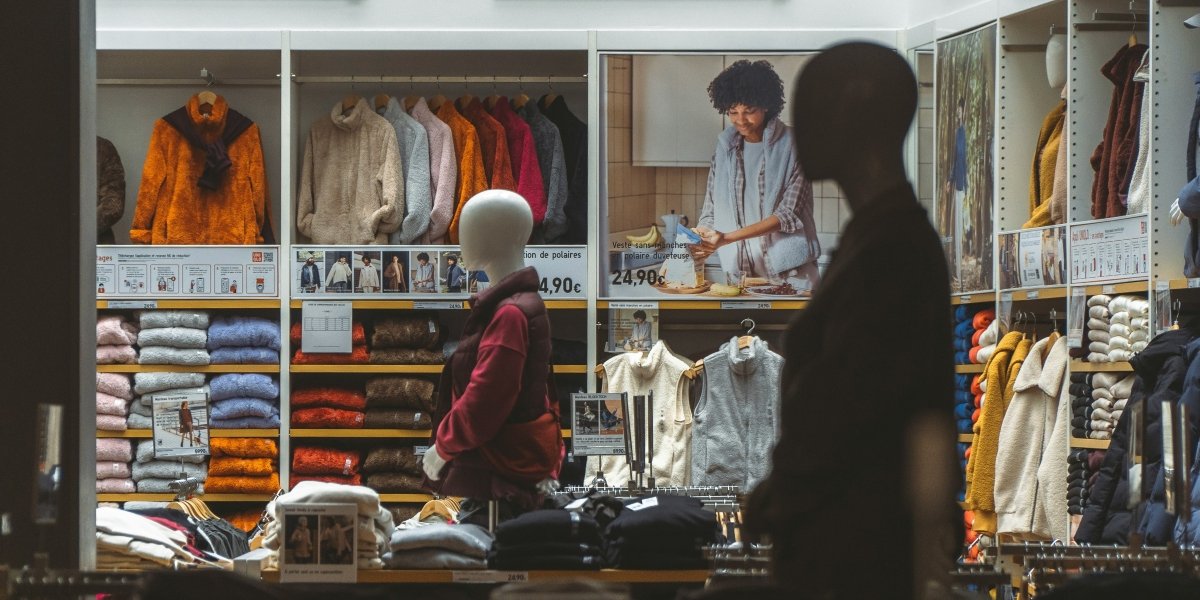
Uniqlo’s new flagship store opens this Friday on the Magnificent Mile, nearly five years after the brand departed the corridor. The new location at 600 N. Michigan Avenue replaces the former store at 830 N. Michigan Ave., which closed in 2021 as part of a broader wave of retail exits from the avenue.
The opening is more than a real estate transaction. It is a statement — from a global brand with 2,500 stores worldwide — that Chicago’s most iconic shopping street is worth betting on again.
A Flagship Built for Chicago
The Michigan Avenue location is the first Uniqlo flagship outside of New York City in the United States. That distinction alone sets the tone for what the brand intends this store to be: not a placeholder, not a reduced-footprint compromise, but a genuine anchor for the avenue’s retail identity going forward.
The store will carry exclusive designs inspired and created by local artists, including JC Rivera, Louis De Guzman, Elena Fiorenza, aplasticplant, and the Art Institute of Chicago. Shoppers can also create their own custom T-shirts and tote bags on-site. The inclusion of the Art Institute as a collaborative partner underscores the store’s intent to root itself in Chicago’s cultural life, not merely its consumer market.
Friday’s grand opening will feature traditional Japanese taiko drum performances at 9:50 a.m., 11 a.m., 1 p.m. and 3 p.m. Customers will receive early access to the Roger Federer Collection, along with discounts on other clothing items exclusive to the Mag Mile location.
The first 500 customers in line each day will receive a free Garrett Popcorn custom tin — a collaboration that celebrates Japanese design with Chicago roots — along with a pastry and tea from Del Sur Bakery. The giveaway reads like a love letter to the city: Garrett Popcorn, an institution on these very streets since 1949, paired with a brand that has traveled 6,700 miles to be back on Michigan Avenue.
The store’s operational features also reflect a modernized retail experience. New locations include self-checkout stations, alteration services and RE.UNIQLO donation bins. Some stores will also offer embroidery services and customizable tote bag options. These are not the trappings of a traditional department store — they are the infrastructure of a brand that understands how contemporary Chicagoans want to shop.
Part of a Purposeful National Expansion
Uniqlo’s return to the Mag Mile is not an isolated homecoming — it is one move in a carefully orchestrated national strategy. In 2026, Uniqlo is significantly deepening its U.S. retail footprint with 11 new store openings across key markets nationwide, including flagship locations in Chicago and San Francisco, four stores across New York City, and brand-first entries into Miami, Florida and Austin, Texas.
For the Chicago market specifically, Uniqlo is also planning a suburban location at Oakbrook Mall, which will mark the third and fourth Illinois locations alongside its existing stores on State Street and at Woodfield Mall in Schaumburg.
The executive framing of the expansion is deliberate. Fuminori Adachi, CEO of Uniqlo USA, described the company’s approach as one of thoughtful growth — opening the right stores in the right places while ensuring every location reflects customers’ voices and delivers a meaningful, high-quality experience.
This milestone year coincides with the 20th anniversary of Uniqlo’s SoHo Global Flagship, the first Uniqlo global flagship outside of Japan — making the Chicago opening a symbolic marker of the brand’s American maturity, not just its commercial ambition.
The Corridor’s Long Road Back
Uniqlo’s return lands at a moment when the Magnificent Mile is in the middle of a carefully watched and still-fragile recovery. Foot traffic on the Magnificent Mile is nearing prepandemic levels, while the area’s crime rate is down 4% year-over-year. Retail vacancy sits at 25%, down slightly from 26% in 2023, but still significantly above the 7% rate seen 15 years ago. Rents along Michigan Avenue have declined by about 24% since 2019, drawing back major fashion and experiential retailers.
That rent decline, painful as it has been for landlords, is precisely what has made the comeback possible. Uniqlo and Spanish retailer Mango — two brands that previously exited the avenue — have both committed to large new spaces. Other significant arrivals in recent leasing cycles include Aritzia, a Harry Potter-themed store, Alo Yoga, Intimissimi and Falconeri.
Perhaps the most telling indicator of renewed confidence: Gap, whose three-level flagship at 555 North Michigan Avenue anchored the street for years before closing in January 2021, is reportedly in advanced talks to return. A Kirsch Agency report projects corridor availability could fall to approximately 23.5% by the end of 2026, down from a peak of nearly 34% early last year.
The arc of the Mag Mile’s decline and recovery is essentially a compressed version of what happened to urban retail corridors across America — except Chicago’s story played out under especially harsh conditions. Tourism had slowed to a crawl during the pandemic, and the corridor faced waves of property damage and retail theft following the events of 2020. Major mall anchors handed back properties to lenders. The avenue, once among the most coveted retail addresses in the country, was quietly written off by some in the commercial real estate industry.
The mood today is different. One real estate professional who has worked the corridor for years framed the moment plainly: “This is not how we return to 2016, but how we reconceive it to be competitive in 2026.” That reconception is visible in the tenant mix now taking shape — less focused on mass luxury and more oriented toward accessible quality, cultural experience, and community identity.
Uniqlo’s Michigan Avenue store fits that description precisely.
What It Means for Chicago
For Chicagoans, the reopening carries a significance that goes beyond retail square footage. The Magnificent Mile is not just a shopping destination — it is a civic landmark, a driver of tourism revenue, a canvas for the city’s identity as a world-class urban center. When it struggles, the city feels it. When it rebounds, the city notices.
Uniqlo set the tone in its own announcement: “From Tokyo to Michigan Avenue,” the brand said, describing LifeWear designed for the city’s fast pace and shifting weather — for commuting downtown and exploring the lakefront. It is marketing language, certainly, but it is also an acknowledgment of something real: Chicago has a character, a climate, and a community that demands clothing designed with intention.
The collaboration with the Art Institute of Chicago, JC Rivera, and other local artists is a signal that Uniqlo is not arriving as a foreign brand planting a flag. It is arriving as a participant in the city’s cultural life — one willing to put local artists on its shelves, partner with a Ravenswood bakery for grand opening pastries, and hand out tins of Garrett Popcorn to the first 500 people through the door.
Chicago’s Magnificent Mile has been told it is in recovery before, and the recovery has stalled before. But Friday’s opening carries with it the weight of a genuine inflection point — the return of a brand that left, at a scale that matters, with a commitment to the community that extends beyond the transaction. Whether the corridor fully reclaims its place among America’s great retail destinations remains to be seen.
For now, the taiko drums will play on Michigan Avenue — and the city will be watching.