By: Marcus Delgado
For many authors, hitting bestseller status feels like the peak of the mountain. The screenshots get shared. Messages roll in. There is a brief moment where it seems like the book has finally made it.
Then something unexpected happens. The attention slows. Sales taper off. Invitations never arrive. The book quietly slips into the background.
Steve Kidd has seen this pattern thousands of times, and he says the problem is not the book. It is the belief that the work was finished.
After helping more than five thousand authors reach bestseller status, Steve noticed a hard truth that the publishing industry rarely talks about. Bestseller was never the goal. It was simply the starting signal.
“The industry trained authors to chase the badge,” Steve explains. “Celebrate for a weekend and then disappear. I watched too many powerful voices feel more invisible after publishing than they did before.”
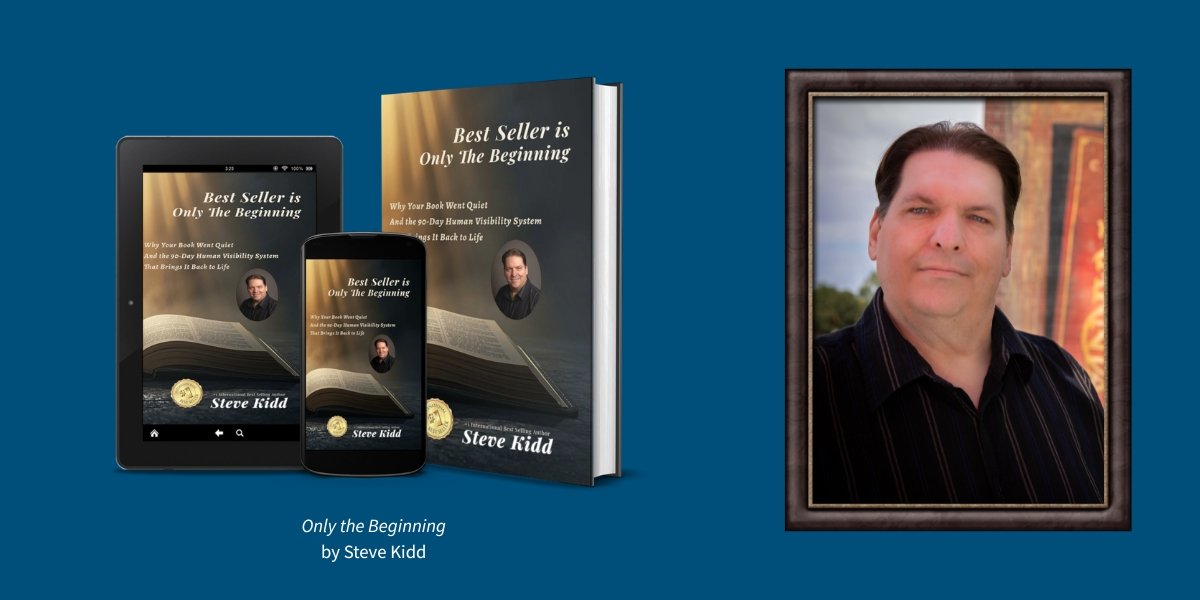
That realization became the foundation for his book Only the Beginning, a guide designed not just to help authors launch, but to help them build lasting visibility, authority, and opportunity long after the charts stop moving.
The Credential Problem Most Authors Ignore
One of the most common mistakes Steve sees is treating a bestseller title as if it carries momentum on its own. In reality, it functions like any other credential. It matters only if it changes where you show up and how you engage.
Steve uses a simple analogy to make the point clear. If someone graduates from medical school but never steps into a hospital, they will not become a respected surgeon. Not because they lack skill, but because they never enter the environments that require it.
Authors do the same thing. They earn the credential and then return to their old patterns. They stop talking about the book. They stop appearing. They assume the market will eventually notice.
Visibility does not work that way.
“The market rewards repetition, clarity, and proof,” Steve says. “When authors stop showing up, the book does not fail. It just goes quiet because no one is carrying the signal anymore.”
How the 90-Day Visibility System Was Born
Steve did not build his visibility framework from theory. He built it out of necessity.
After writing more than forty books of his own, he realized he was guilty of the same behavior he saw in others. He was helping clients launch books while his own titles sat untouched. Not because he did not care, but because life was full. Business was demanding. Time was limited.
That reality shaped the 90-day visibility system.
“I needed something that worked in real life,” Steve says. “Not something that required me to become a full-time marketer.”
The system was designed for authors who are also entrepreneurs, executives, speakers, and leaders. People whose lives do not pause for promotion. Ninety days became the ideal container. Long enough to build recognition and trust. Short enough to be realistic.
It became the bridge between a one-day achievement and a long-term platform.
The Moment Everything Clicked
Like everything he teaches, Steve tested the system on himself first. He applied it to books that had already hit number one internationally and then faded into silence.
When the system was put in place, those same titles climbed back to the top ten and number one positions, sometimes years after their original release.
That was the moment the insight became undeniable.
“Most books do not fail,” Steve says. “They go silent. And silence is not the same as finished.”
He compares it to finding embers in a fire pit the next morning. The structure is still there. The fuel remains. All it needs is air and attention.
Visibility does not expire. It just has to be reignited.
Why Algorithms Cannot Replace Human Trust
Many authors rely heavily on ads and algorithms, hoping technology will do the work for them. Steve does not dismiss those tools, but he is clear about their limits.
Algorithms cannot create trust. Ads cannot build a relationship on their own. People buy from people they recognize, resonate with, and trust.
That is where human visibility comes in.
Human visibility puts relationship before tactics. It focuses on voice, story, expertise, and lived credibility. A book plays a powerful role here because it gives readers time. Time to understand who you are and why your message matters.
Ads can amplify trust, but they cannot replace it. The market moves when humans connect, not when systems run quietly in the background.
Why One-Time Marketing Never Works
Another misconception Steve dismantles is the belief that marketing is something you do once and then forget.
Many authors hope for a single promotion, a single podcast, or a single ad that will carry their book forever. That moment does not exist.
Visibility behaves like a relationship. It stays alive through presence and relevance. When authors disappear, the book does not die. It simply stops being seen.
“Books do not die,” Steve says. “They stop being carried into the conversation.”
Marketing is not about doing more. It is about doing the right things consistently enough that the market recognizes you as someone worth paying attention to.
The Three Pillars That Keep Books Alive
At the core of Steve’s system are three pillars.
Clarity ensures the market understands who the author is, what they solve, and why the message matters. Without clarity, visibility has nothing to attach to.
Consistency keeps the signal alive. SEO, categories, rankings, reviews, and promotion tell platforms that the book is active.
Connection is where visibility turns into opportunity. Readers engage. Media notices. Invitations follow.
When all three run together for ninety days, the market remembers. And remembered books keep selling.
For Steve, the message is simple. Launch day is not the victory lap. It is the starting line.
And what happens next is where careers are built.